
The insignia of the Lafayette Escadrille and no, that’s NOT a Nazi symbol. Way before Hitler and his evil bastards appropriated it, the swastika was a symbol in many cultures around the world, including Native Americans.
Ever since the first man took ship to go explore somewhere in the New World, young Americans, mostly men as women tend to have better sense, seem to enjoy going abroad in search of dragons to slay for some reason or another. Americans have been fighting other countries’ wars for as long as there’s been an America. Some go out of a sense of bravado and adventure, others for that most elusive of game “a cause”, and still others, especially in the days before fingerprint databases and DNA tests rendered it nearly impossible, to simply start over as another person — perhaps to forget a broken heart and perhaps to stay one jump ahead of the penitentiary.
One of the most famous groups of American young men who went to the service of another country was the Escadrille Number 124 of the nascent French Air Force. History knows them better as Le Lafayette Escadrille. These 38 men flew under the command of their five French officers from March 1916 until America officially joined the Great War in 1917 at which point they were incorporated into the even MORE nascent Army Air Corps.
When the group first formed, it was called the Escadrille Américaine. For some reason, however, — maybe it was having “American” right in the name — the German embassy in the United States filed a formal protest because America was “neutral” at the time and having a group of people under the name Escadrille Américaine apparently seemed to suggest America was allied with France rather than being strictly “neutral.” So the French changed the name to honor the biggest French hero in American history.
The unit received its baptism of fire over the Battle of Verdun soon after its constitution. On 18 May 1916, a Tennessee boy named Kiffin Rockwell became the first Lafayette Escadrille pilot (and by extension the first American period) to down an enemy aircraft when he shot down a German observation plane near the Verdun battlefield. Sadly, Rockwell would not survive the war but became the second casualty of the unit. The first casualty was one Victor Chapman who was shot down over Verdun 23 June 1916. In all, nine of the original 38 volunteers died in the skies over France while two more died later on when the unit became part of the American Army Air Corps.
The main weapon of the Escadrille was the Nieuport 11, affectionately called La Bebe’ by the pilots. It easily outclassed the monowing Fokker fighters which had driven all the earlier Allied aircraft from the sky during the latter half of 1915. It was nimble and powerful, but not without issues. Unlike German planes, the French had yet to develop a working synchronizing gear to enable the machine gun to fire through the propeller of the plane. The Nieuport’s single Vickers gun fired above the top wing which made aiming slightly more difficult than its German counterparts like the Albatross DIII.
If you like being an insufferable know-it-all at movies, and who doesn’t, if you’re ever watching the WWI movie about the Lafayette Escadrille called Flyboys you can tell everyone the Americans are flying the wrong planes because the movie uses replicas of the later Nieuport 16 which fired through the propeller AND had the full nose ring seen in several of the movie shots. Also, the Nieuport 11 wouldn’t have been flying against the Fokker Triplanes like in the movie since the 11’s had been replaced before the Triplane’s appearance in 1917.
Another historical inaccuracy of the movie is the inclusion of an African American pilot. The character is obviously based on the legendary Eugene Bullard who was the son of American slaves and who DID serve in France, first in the trenches in the infantry of Great Britain and later flying in the French Air Force. An amazing and deadly pilot who went to Europe to escape the rabid racism at home, Bullard nonetheless did not fly for the Lafayette Escadrille because they stopped taking volunteers once 38 had been reached. I could find no reason why because other men, white and black, were turned away once the 38 mark had been reached.
The Lafayette Escadrille officially came to an end 8 February 1918 when its surviving pilots were absorbed into the newly formed American 103rd Aero Squadron. Try as I might, I couldn’t locate the fate of the wonderful mascots of the Lafayette Escadrille who just happened to be two full grown African lions named, appropriately American enough “Whiskey” and “Soda”and who pretty much had the run of the aerodrome and the barracks where the men slept.
Love y’all and keep your feel clean!

 I never parted from Mama if we were mad at each other. From the time I could drive I would threaten to follow her to work if we didn’t fix whatever lay between us. As a result, when the day came going on four years ago now and I had to stand over her casket, I felt grief — crushing grief –; I felt profound loss; but what I did not feel was regret. I’m not saying this makes me a great son or a great person because it doesn’t. I’m saying it because I haven’t followed the “no regrets” program with everyone in my life.
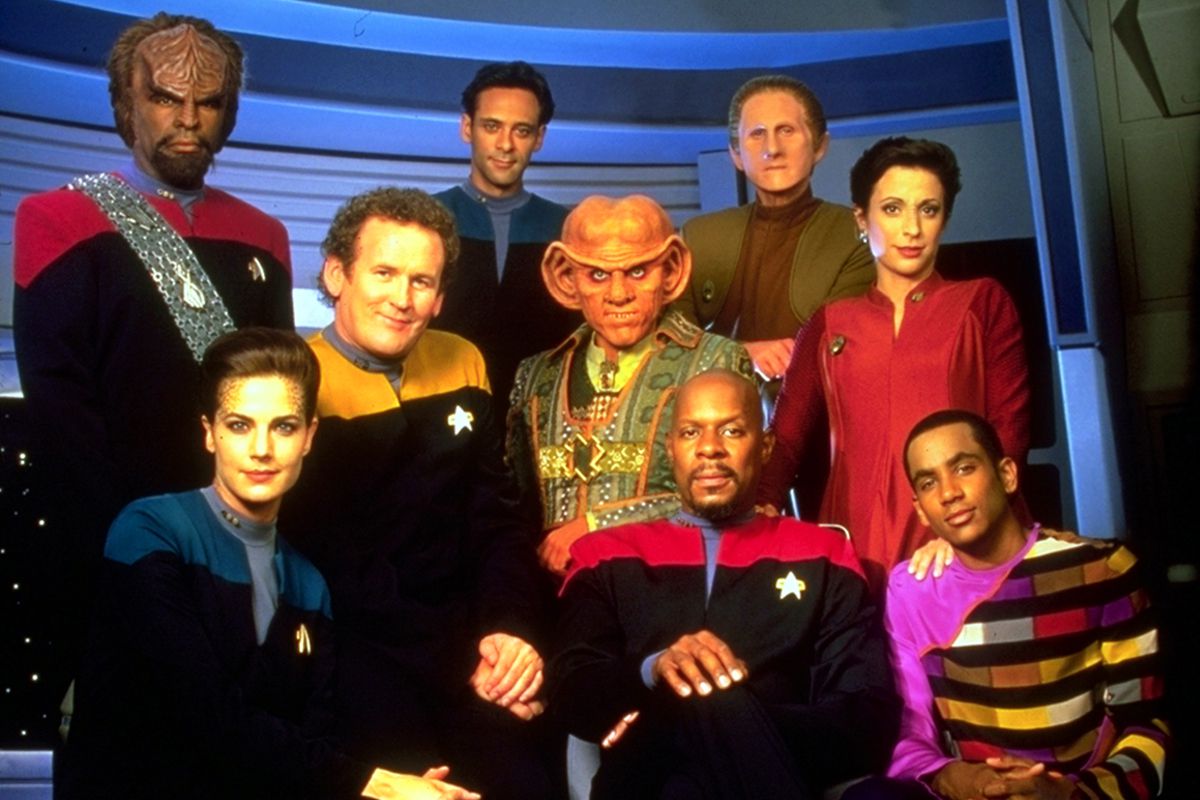
 Stardate 8 September 1966 a little known and lesser heralded science fiction show debuted on CBS. This little one hour space drama would only last three seasons — less than 100 episodes — but it would change the lives of countless people then yet to be born. Of course the show was Star Trek, known in Trekkie parlance as The Original Series or TOS to distinguish it from Star Trek: The Animated Series (TAS); Star Trek: The Next Generation (TNG); Deep Space Nine (DS9); Star Trek: Voyager (VOY); and, most recently, Star Trek: Enterprise (ENT). Anyone on the set back then would have been dumbfounded to know they were kicking off a bona fide cultural phenomenon and fifty years, six (soon to be SEVEN) TV series, and thirteen feature length movies later, Star Trek would be an actual way of life for some people. All you have to know is the Holy Bible is available in Klingon.
 I discovered Star Trek during the summer between fifth and sixth grade, a period I like to call the Babylonian Exile, when I was a lonely, bereft kid living in Columbia, SC for what seemed like the longest three months of my life. I was flipping channels . . . by hand, no less . . . and I saw a green girl dancing. I stopped and by the end of the episode, I was a devoted fan. I fell in love with Star Trek before I discovered Tolkien and Middle Earth, which is still hard for me to believe since I favor fantasy over science fiction these days. I spent every 3:00 hour that summer parked in front of the TV watching my new heroes Kirk, Bones, and Spock battle Klingons and Romulons . . . and each other more than once. When we moved back to the upstate, I was delighted to find the show came on up here, too, and at 7:00 so I could watch it during the school year as well. For those of you tender youths who wonder why I didn’t just “DVR” it, at the time VCRs were a bit in the future and anyone proposing something like commercial free television on a “hard drive” would have been burned at the stake as a witch.
 episode. I’d be a happy little camper then.
 one thought the way the writers rebooted the series while still maintaining continuity with the old timeline was genius. I know a lot of people wanted to scream deus ex machina, but hey, it worked . . . even if we did get a new Spock slightly more disposed to emotion. I’m not bucking any trends, however, when I claim The Wrath of Khan as being my favorite of the movie series. Spock dying to save the ship gets me every time AND it sets up the next few movies where Kirk steals a ship along with the rest of the gang, who even at this juncture are NOT as young as they used to be, in order to go find their friend.

 He always knew this day was coming, but he tried so very hard to fool himself into denying the inevitable. Once he’d been cut at the end of last season, he told himself it was just a temporary setback and he’d have a new gig with a new team in no time at all. It’d be like the last time he got traded . . . what a row that was! Been with a team for nearly ten years and along comes a new manager and next thing a guy knows, well, he’s looking for a new job. Of course, he’d had an agent back then. He could afford one. Unfortunately, a couple of years bouncing around the minors pretty well did that in. The last two teams, he’d handled his own contracts. It wasn’t like he need a whole lot of legal advice anyway. Guys like him never did. In all his career, he’d never merited more than a little bit above league minimum salary anyway.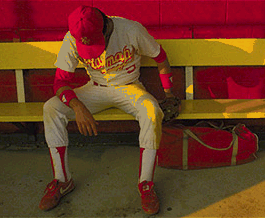


 I told you last post about my move in day at Clemson and I decided to go ahead and enlighten y’all about the day I spent becoming an engineer. I had listed civil engineering as my major of choice before I got to Clemson mainly for two reasons: one, and I don’t know if it’s still this way, but then Clemson pretty much wanted you to declare a major in your junior year . . . of high school; and two, Daddy had counseled me to pick a degree which would let me and help me earn a lot of money.
 All across the country last weekend and this weekend folks everywhere have seen the annual migration of teenagers and early twentysomethings from home back to college. For all the freshmen in the bunch, they are spreading their wings for the first time. I’ve noticed it’s making a lot of moms and dads sad all over.
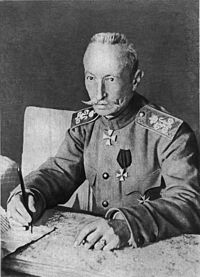 Debacles such as the Russo-Japanese War and the Battle of Tannenburg have earned a dismal reputation for the Russian soldier. Truthfully, nothing could be further from the truth. The average Russian soldier and his later Soviet counterparts were hard, tough fighting men capable of great feats. Unfortunately, this valiant soldiery had the terrible luck to usually end up saddled with criminally ineffective leadership. As a result, from the outside, it looks like the Russians were somewhat inept.


 Kentucky Colonel or no, “Sub” loved to teach us about the Civil War. We spent four weeks on everything from Jamestown to Fort Sumter and from the second week in September until February on the War of Southern Independence. Then Sub realized this was an AP class (we were his first) and we were going to have to take a big test the first week in May and he hadn’t covered a few important items from our nation’s history . . . like the entire 20th Century. Even though the War Between the States was important, most of us figured that test would have at least one or two questions on WWII and maybe even a question on the Soviet Union. So from February through the AP test, we covered a chapter in our book every two days. I made Fs on the tests, but I made a 5 on the US AP History Exam.


 "Granny Beads and Grocery Store Feet"