I originally published this six years ago on Pearl Harbor Day 2011. Please help me remember a terrible attack and a great, unsung man.
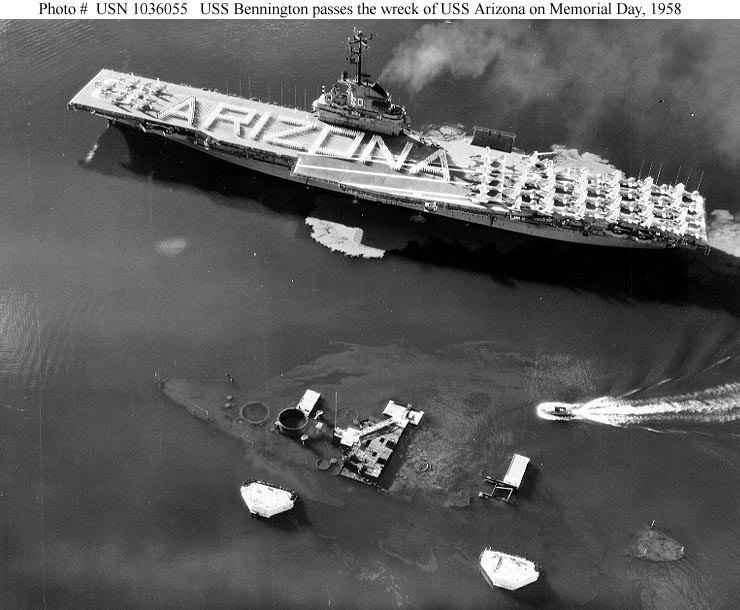
Seventy years ago today, the Empire of Japan launched a successful sneak attack on the US Naval Station at Pearl Harbor in Hawaii. Most of us know the bare facts of the attack. Most of us have heard of the USS Arizona and how she blew up at anchor from a well-placed bomb. Slightly over 2,400 servicemen and civilians were killed that day and the moment FDR had waited for — and some say helped orchestrate through intentional inaction — had arrived, America was entering World War II. We were over two years late to the party, but once we got the blood out of our eyes from Pearl Harbor, we made a big entrance.
As a young boy, I sat on a Coca-Cola crate in the back room of the Napa Auto Parts store where Papa Wham was the sole employee and listened as a group of older men lounging around on similar crates played checkers, told fish tales, and exchanged updates about their lives. These were members of America’s “Greatest Generation” who had grown up during the REAL Great Depression and who had marched off to battle in World War II. If I were quiet enough — difficult for me even then — so that the men forgot I was listening, I could get quite an education on some topics.
If, in between customers, Papa came back to the gathering ; however, to hear Mr. John regaling the crowd with a memory of a certain “ladies’ home” he once visited in France right after “The War,” Papa would clear his throat and the men would remember my presence and Mr. John, red-faced, would probably ask me if I would go across the street and get him a Coke and some crackers, which I was always glad to do. I was rather older and Mr. John had already answered the final muster before it occurred to me that I was being kindly “gotten rid of.” One of the men who frequented those back room gatherings, though he seldom stayed very long, was Mr. Andrew Dupree — universally known, for reasons unknown to me — as “Gump.” To me, he was Mr. Gump, unless Granny Wham were around, in which case, Papa had instructed me to say, “Mr. Dupree.”
The men who gathered in Papa’s back room often reminisced about their service during the war. If the story was deemed mostly harmless, I would be allowed to stay and listen. Most often, however, I would be asked to go on a Coke and crackers run. One time, however, Papa was asked to let me stay for the story and that is why I heard Mr. Dupree’s eyewitness recollection of December 7, 1941. 
Gump was a young sailor in the navy stationed at Pearl Harbor the day the Japanese attacked.
Papa Wham had placed his hand on my shoulder as soon as Gump said, “Today’s ‘boom-boom’ day, boys” in his usual low, sad voice, “been a long time now.” The hand on my shoulder was my cue to go to the cash drawer, get a fiver and go to Alverson’s Drug Store for Cokes. This time though, Gump caught me by the arm as I turned. Then he looked at Papa and I remember him saying, “Frank, let Shannon stay if you would. We’re getting old and someone needs to remember this.” I remember Papa nodded solemnly and slowly then sat down on the crate next to me. He put his arm around me and whispered in my ear, “Don’t tell Granny Wham, okay?” I nodded and turned to hear Gump tell this story.
Please remember I was 8 years old at most and my memory, while good, especially for stories, is far from perfect and in the end, I didn’t get to hear it all.
It was Sunday, as you all know, and I was on my way to chapel walking along the shore next to Battleship Row. Mother had worried that I would take up a bad lifestyle in the navy and made me promise her to always go to church whenever I could. We had all heard rumors about a possible attack, but that’s all we figured they were. I was just glad to be in Hawaii. None of us figured we’d stay out of the war forever, but we all thought when it got started for us, it’d be over in Europe.
So I had left the barracks about ten minutes before when I heard the first planes. I didn’t even look up because planes were always coming and going from the airfields around the islands. The first explosion knocked me over and that’s when the screaming and yelling started. I rolled over and looked up and saw the meatballs on the planes. The klaxon was sounding general quarters for the entire island. I wasn’t assigned to a ship yet because I hadn’t been there long enough. An older looking marine sergeant grabbed my arm and pointed towards an AA machine gun. He and I jumped in with a couple other guys and started shooting at anything we could.
I was scared shitless and was looking around everywhere. That’s when I saw some torpedo planes making runs at the battleships. You could see the fish in the water headed towards the ships. Everywhere up and down the harbor crews were trying to get the ships moving and trying to fight back at the same time. Didn’t do much good though. One of the torpedo planes strafed us after he made his run. We all ducked down but one guy took one of those bullets square in the chest. He exploded all over the rest of us. I had blood and pieces on me. Two of the other guys had some cuts from shrapnel. I just froze, but that old sergeant started slapping all of us around — we were a bunch of kids and God only knows how long he’d been in service — and yelling at us to get with it. He pushed the dead guy over to the side and got us all back up manning the gun.
That’s when the entire world seemed to blow up and go silent at the same time. We all flew against the sides of the dugout and it kind of stunned us all, even the sergeant. When I stood up, I saw a big ball of fire where one of the ships had been. I found out later it was the Arizona. I couldn’t hear. I put my hand to my ear and came away with blood. Corpsman told me later my eardrums had blown out from the shockwave.
 The attack seemed to last forever. Planes were everywhere, bullets were everywhere. I saw several guys get shot down by strafers when they tried to run across the parade grounds. We couldn’t breathe from all the smoke and oil in the air. You couldn’t believe the smell. The smell was ungodly. Burning diesel oil, hot metal, burning skin. The burning skin was the worst. If you’ve ever singed your arm hair, multiply that about a million times.
We stayed hunkered down in that dugout and shot back until we ran out of ammo. Once it was all over, the sergeant told us — we could hear just a little by then — to get back to our units. I got back to the barracks and it was still in one piece. We had muster to see who was still with us and who wasn’t accounted for. We were kinda lucky and kinda not.
Once things started getting better organized, I was sent out with about six other guys in a small motor boat to search the harbor waters for survivors. We found a few, but mostly, we found parts. The whole time we still had that smell hanging over the water. I think I didn’t sleep or eat for two days. Just went around trying to put out fires, help find people — guys were trapped in some of the sunk ships — stuff like that . . . it was bad, fellas. It was real bad. I remember this one guy . . .
Gump’s voice caught in his throat and Papa laid a gentle hand on his back then told me to “go get Gump a Coke and some crackers.” I could hear the story of blood and gore, but these were the men of the Greatest Generation, stoic and strong; Papa would spare Gump the indignity of a child seeing him shed tears. It was okay for the other men to watch, I guess. They had stories too. They understood.
Mr. Dupree served with distinction in the Pacific Theater. I wish I could say his horror at Pearl Harbor was the worst thing to happen in his life, but that would be a lie. Gump’s life was filled with horror and tragedy even after he came home. When Papa and Granny built their home on Weathers Circle, Mr. and Mrs. Dupree lived across the street from them in a small, tidy white house. They had a son, Jack, who was about my daddy’s age, and had just had a baby. One of the neighborhood whispers was that Mrs. Dupree was “nervous” which was code back then for any mental illness from mild depression to schizophrenia.
One night, (this was way before I was born) Papa answered a frantic knock on the door to find Gump standing in his nightclothes covered in blood. He said Gump told him — rather calmly — to please call an ambulance, that his wife had “hurt herself.” As it turned out, his wife had taken a pistol and killed the baby in the crib, shot Jack where he lay in his bed, then shot Gump before putting the gun to her own head. I think she left a note saying she “wanted them all to be together forever” or something like that.
Gump survived; so did Jack. I can’t imagine the psychological scars they both carried. By the time I knew him, Gump lived in a small mobile home in a grove of trees off McCarter Road between Fountain Inn and Greenpond. Jack had moved away by then. I don’t know if Gump had any grandchildren. I just know he loved fishing. He fished every day except Sunday. Rain or cold didn’t stop him. Looking back, I imagine that’s the way he coped with all he had been through.
Mr. Dupree died May 7, 1983. I am certain of the date because it’s also my little brother Nick’s birthdate. Papa and Granny went to the funeral before they came to the hospital. He dearly loved my mama; it upset him as much as it did Papa and Granny Wham when Mama and Daddy divorced. I know Gump never really got over the war or his wife’s suicide because the last December 7th before he died, he gave Mama a new purse with a letter in it. I’ve never read it, but it begins “Dear Lawana, Today is ‘boom-boom’ day.”
Mama said Gump was explaining some more things. That’s all she said.
Love y’all. Remember those who have fallen.
 I’m not at all a politically correct person . . . just ask Budge or spend ten minutes around me, but I am so glad that the term “retard” is now a sure-fire ticket to a PC beat down by anyone around with an iota of sense. One of the things I miss most about being in education is the chance to interact daily with the “special students.”I’m no fool or naive and I know these children can be difficult to deal with at times, but more often than not, they are the sweetest and kindest group of children in any school. At my last position as librarian here in the Upstate, I was blessed to have met Drew. Drew was born with Down’s Syndrome, which is medically called Trisomy 21, which further means he has THREE copies of his 21st chromosome instead of the required TWO. As a result of his genetic condition, Drew has easily recognizable features including a slightly webbed neck and a mildly enlarged, slightly protruding tongue.

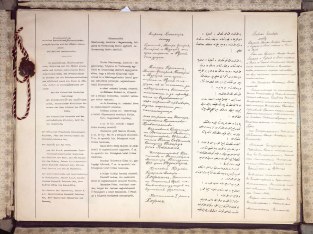 On 3 March 1918 in the small city of Brest-Litovsk near the border of modern Poland and modern Belarus,
 For years, people have gotten to know me, listened to my stories, and inevitably one or two of them come to the same conclusion and say the same thing: “Man, you should write a book!” So far, I haven’t written the book so many people seem to want, but I’ve got my reasons.
 The flu fairy paid a visit to our house last week and she only had eyes for me. Now, because I don’t go out much, I’m not exposed to a lot of bugs. Budge, however, is a teacher of fourth graders and they are walking germ soaked little biological weapons, so I imagine my virus hitched a ride home from one of them. I don’t get sick often; in fact, it’s been many a long year since I was as sick as I was last week.




 I love Christmas lights. I remember when I was little, Papa and Granny Wham would take me out riding every Christmas season to look at lights in Fountain Inn. We’d always ride out to a place called Stewart’s Lake. Now today, places like Stewart’s Lake are everywhere, but back then it was the only game in town. The entire yard was lit up like, well . . . a Christmas tree! They had elves and Santas and three or four Nativity scenes, just lights everywhere. It was breathtaking to my single digit eyes. I remember even then asking Papa Wham who put all those lights up every year. He said he didn’t know and I was amazed because Papa Wham knew everything.
 October 31, 1517. The day wasn’t known as “Halloween” then but by the more formal “All Hallow’s Eve,” and it wasn’t a day for carved pumpkins and gathering candy door to door. On that day, 500 Halloweens ago, in a little known university town called Wittenburg in what was then Saxony, a mostly unknown monk with some reservations about Holy Mother Church’s way of doing business wanted to start a debate on some issues within the Church. In that pre-Twitter time, debates and discussions took place in the open air or in a lecture hall and if one wanted to debate something or other, he (and back then it was ALWAYS “he”) would post an announcement on the cathedral door with the proposed topic for debate and a time for the debate to take place. Following the custom of the day, that little known monk tacked a list of 95 topics or theses onto the door and waited to see what would come of it.
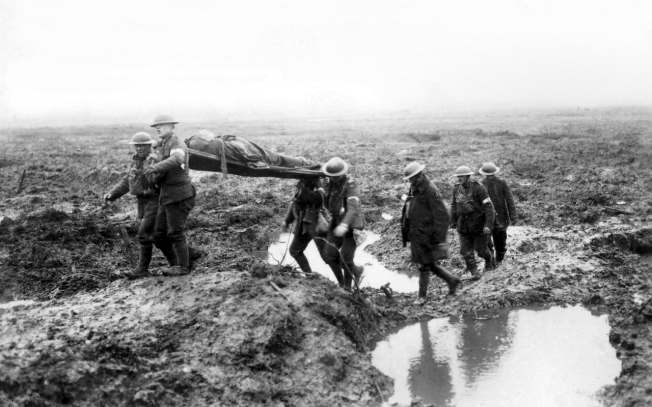 Imagine drowning, not in water, but in mud. Not thin quicksand, but thick, sucking, grasping mud. Picture your mate up to his armpits in chalky quagmire. He’s been there two days now but you can’t reach him and he’s too weak to grasp a rope. He’s just slowly sinking into the mire and every time you pass he begs you to shoot him so he doesn’t drown in mud.
 "Granny Beads and Grocery Store Feet"