 The flu fairy paid a visit to our house last week and she only had eyes for me. Now, because I don’t go out much, I’m not exposed to a lot of bugs. Budge, however, is a teacher of fourth graders and they are walking germ soaked little biological weapons, so I imagine my virus hitched a ride home from one of them. I don’t get sick often; in fact, it’s been many a long year since I was as sick as I was last week.
Monday night, I started feeling nauseous and my head hurt. At first, I thought I was having a dramatic reaction to some terrible news I’d gotten earlier in the day, but as the evening wore on, it became clear to me that was not the case. Then, it hit. If you’ve ever been violently sick on your stomach, you know exactly what I’m talking about. Your mouth floods with saliva and you feel a cold sheen pop out on your forehead.
I got to the bathroom in good order. I even had time to take the trash bag out of the plastic trashcan and place it between my feet because at the time, I wasn’t exactly sure which way this hurricane was going to blow. Just my luck — Category 5 both ways. I clutched the plastic container to my chest as successive meals pour into it with each heave. I can’t be certain, but I’m fairly sure I got up some wedding cake from our marriage in 1996.
Meanwhile, back in the back, liquid fire was making its way from me to the bowl. It had no slight sign of substance . . . simply magma from the heart of the volcano rushing to meet the porcelain ocean. For forty-five minutes my body followed a pattern of wrenching clench in the abdomen followed by explosions at both ends. Finally, the wave subsided and I was able to clean up and slowly make my way back to the recliner . . . just in time to jump up and sprint it out again.
This time, my reaction wasn’t quite as violent, but it lasted longer so I pulled out the medicine box to see what I could find. Gold on the first expedition! Imodium and Zophran. For those who don’t know, Imodium is a lovely and quite strong anti-diarrheal medicine. It can put the stopper in the bottle quite well. Zophran is an anti-nausea medicine originally developed for chemo patients. This little stash harkened back to an incident early last year when Budge had a bad UTI and was nauseous.
I slipped one of those little beauties under my tongue and dealt with the disgusting taste and texture for two minutes while it dissolved, then started clean up measures again. The meds gave me enough time to ponder the mechanics of being sick. See, up until I got married, I was capable of many things independently. I could drive, I could pick out my clothes for the day, and, most of all, I could throw up. I actually had no idea I was throwing up wrong my entire life.
If I am simply sick to my stomach and so without worry as to the nether end of my alimentary canal, I am a toilet hugger. I get cozy with the porcelain throne. I use the weight of the bowl to add velocity to my heaves and afterwards, I love to lay my head against the cool surface of the tank. I’ve been sick this way my entire life. I have knelt beside many a toilet and sometimes the surrounds weren’t so great such as back in my wilder, hard-drinking days. I just thought that was the way one got sick.
Turns out, I was wrong. My beloved has since informed me that the proper way to address the Great Porcelain God is the “stand and deliver” method. She insists our heads were never meant to inhabit the region where our bottoms are designed to sit. I told her Washington, DC was full of evidence to the contrary, but I digress. According to her, one is supposed to stand up, bend a little at the waist, and deposit the upchuck into the bowl.
She also doesn’t cough before she throws up. For reasons unknown, I’ve always had a preliminary coughing and gagging spectacle before heaving. This is apparently unnecessary. As Budge puts it, “Just open your mouth. If you’re going to be sick, something will come out. You don’t have to do all that coughing!” Strange. I’d never realized it but she was right.
So, I have decided to adopt a “non-coughing” approach to vomiting since it is much easier on my throat and I’m thankful to my beloved wife for introducing me to coughless sickness. However, she has yet to convince me to stand up and get sick. Now when I get sick, it’s generally a two door show so it’s a moot point because I’m sitting on the pot holding a pot, but on those occasions when the situation requires it, I’m still going to do my obeisance to the Great Porcelain God . . . on my knees.
For those interested, I was sick for about 72 total hours. After the first night, Budge insisted I go to the doctor the next day and she gave me a shot of phenergan which did in the nausea once and for all and put me to sleep for many hours straight. I awoke the next day weak as a kitten but I wasn’t sick! I hope that’s the end of my sicknessess for another long period. It’s not something I can get used to.
Love y’all and keep those feet clean!








 I love Christmas lights. I remember when I was little, Papa and Granny Wham would take me out riding every Christmas season to look at lights in Fountain Inn. We’d always ride out to a place called Stewart’s Lake. Now today, places like Stewart’s Lake are everywhere, but back then it was the only game in town. The entire yard was lit up like, well . . . a Christmas tree! They had elves and Santas and three or four Nativity scenes, just lights everywhere. It was breathtaking to my single digit eyes. I remember even then asking Papa Wham who put all those lights up every year. He said he didn’t know and I was amazed because Papa Wham knew everything.
 October 31, 1517. The day wasn’t known as “Halloween” then but by the more formal “All Hallow’s Eve,” and it wasn’t a day for carved pumpkins and gathering candy door to door. On that day, 500 Halloweens ago, in a little known university town called Wittenburg in what was then Saxony, a mostly unknown monk with some reservations about Holy Mother Church’s way of doing business wanted to start a debate on some issues within the Church. In that pre-Twitter time, debates and discussions took place in the open air or in a lecture hall and if one wanted to debate something or other, he (and back then it was ALWAYS “he”) would post an announcement on the cathedral door with the proposed topic for debate and a time for the debate to take place. Following the custom of the day, that little known monk tacked a list of 95 topics or theses onto the door and waited to see what would come of it.
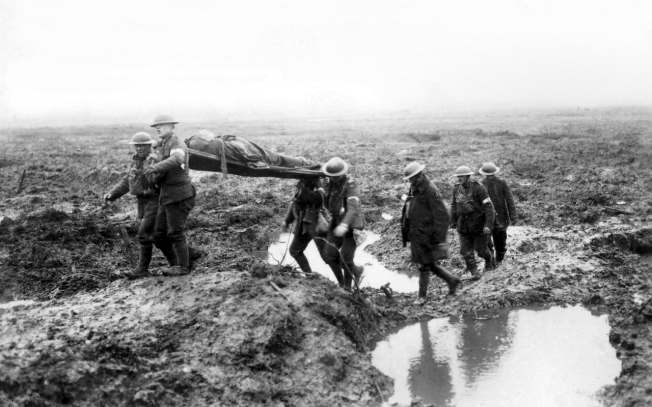 Imagine drowning, not in water, but in mud. Not thin quicksand, but thick, sucking, grasping mud. Picture your mate up to his armpits in chalky quagmire. He’s been there two days now but you can’t reach him and he’s too weak to grasp a rope. He’s just slowly sinking into the mire and every time you pass he begs you to shoot him so he doesn’t drown in mud.
 My beloved Clemson Tigers went down in ignoble defeat last night to the, supposedly, lowly Syracuse Orange by a score of 27-24. This after we started the year as the defending national champions and sporting a six win, no loss record on the season.
 Another huge piece of my adolescence is irretrievably lost to the world. Tom Petty, front man for Tom Petty and the Heartbreakers, has died at the age of 66. First Prince, now Tom Petty. The Eagles have begun dying off. Basically, all my good music is slowly falling forever silent.
 Seventeen years ago I started my first teaching career at Woodmont High School with two classes of English IV and four classes of English II. One of the students in one of those sophomore classes was a little slip of a girl. She was blonde and blue eyed and cute as a button. She didn’t have much to say on the first day, and to be truthful about it, she wasn’t very talkative the entire time I knew her. Her name was April Pruitt and because of a quirk in scheduling, she and many of her classmates from that first sophomore class would be in my English III class the next year and would finish up with me in English IV the year after that. I guess about a third to a half of the WHS class of 1998 had me for English as sophomores, juniors, and seniors. They were the first of my favorite students and quiet, short, but smiling April stood tall among the ones nearest and dearest to my heart.

