I originally wrote this about five or so years ago. The twins are grown and married with children of their own now, and we’ve moved to a new building, but I’m still rocking babies every Sunday from 11:00 to 12:25.
I am an exceedingly odd duck — and not for the reason most longtime readers of my work are thinking of right now. I am a male nursery worker whose wife doesn’t work in the nursery with him. To my knowledge, and the knowledge of everyone I’ve discussed this with, I am the only member of my kind. I serve in the Snails class at our church. This class is the pre-Sunday School of Sunday School and encompassed ages from “walking steadily without help” down to “mama finally has the courage to leave her bundle with a semi-stranger.” I serve because I enjoy babies — spit up, dirty diapers, and all. I should note, however, that my church has a policy forbidding males to change any baby’s diaper.
It’s one of those particular rules which runs its fingernails down the chalkboard of my anti-authoritarianism because I resent the implication implicit in the policy, but I make it a point of honor to tell my co-servers I am forbidden by statute, not a weak stomach, from changing diapers. After all, I am a veteran of three Samples children from my former church nursery. Those little tykes — who are now in high school grown and married and middle school in college– were fearsome in what they could pack in a Pamper. Their mom didn’t bring Wet Wipes, she packed Bounty paper towels and a shop-vac. On more than one occasion, I have held a Samples child beneath a running faucet to expedite the removal of “material” from his back and it is not unknown for a nursery worker to resort to shampooing hair to complete a full diaper change. After Logan, Riley, and Emily, nothing in a Huggies can deter me. Stun me for a moment, maybe, but not deter.
But I digress.
This past Sunday morn, I was on the schedule to serve with the Salon twins. They have never served with me before and when they arrived and I was already in the room, I got the usual “well, he’s going to be useless” look. Most of the time, I take women by surprise because of having Shannon for a first name. I love and miss Mama, but regardless of the fact she swore to her dying day it’s a unisex name, I never got to have a bicycle tag or a book bag tag because all the Shannon’s were pink and not blue. But I’m not bitter. Anyway, these two are in college and are six-year veterans of nursery work and babysitting and I could tell they figured on carrying me for the day. 
Oh thee of little faith.
When the first song of the service started, we had three charges: Jackie, who is the chunkiest little boy you’d ever want to meet and adorable besides; Madeline, a darling little girl who isn’t long for Snails since she is up on two legs and motoring well; and Oakes, another little girl but she is a tee-tiny newborn and her mom was leaving her in the nursery for the first time. Three babies; three workers. Easy-Peasey, right? No.
To understand what happened next, you have to understand a little about church. Service starts at 9:15 AM. That means the first song cranks up then. Most people seem to live in some other time zone, though, because THEIR 9:15 is much closer to OUR 9:25 — 9:30. It never amazes me how the same parents who can get multiple children out the door to school and day care so they can get to WORK on time have such an awful record of getting those same children to CHURCH on time.
Same goes for those scheduled to serve — a man or woman who may have a seven-year running record of perfect attendance at his or her employment doesn’t think twice about calling the staffing coach to say they “just can’t make it today.” Now that it’s football season, it’ll get exponentially worse. A guy can stay out until midnight on Monday or Thursday at the sports club watching football and still manage to get to work on time or even a little early, but for some reason he just can’t get up the day after tailgating and watching a NOON game at the ol’ alma mater forty-five minutes away.
Anyway, having three bambinos at 9:15 means nothing.
By 9:30, we had EIGHT. Madeline was our best walker, Jackie our fastest crawler, and Oakes had another member of the “car carrier club” situated next to her in the teensy person of Lyndsey. Our other four were Osteen, Mae, Benjie, and Sidney. Only Maddie was fully mobile so it looked like we were off to a good start . . . for five whole minutes. Then, for some reason we never did determine, Mae decided to see if she could hit E flat over Middle C. For those of you who’ve never worked with babies en masse, it’s the funniest thing — when ONE of them goes ballistic, they ALL go ballistic! By 9:45, we had an eight piece choir making a not-so-joyful noise. The three of us looked at each other with a gaze that must have been reminiscent of the look the troopers of the 7th Calvary gave Custer when all those Sioux and Cheyenne rose up out of the grass at the Little Bighorn.
We petted and rocked and patted and replaced binkies which were promptly spit right back out. I know a lot of you are wondering why we didn’t just cork the kids with a nice warm bottle? No such luck. The majority of women at our church are nursers and while I am capable and willing to do a lot of things traditionally considered “woman’s work,” breast-feeding is something God in His infinite wisdom thankfully did not equip me to do. We were swimming upstream against an Amazonian current. At one point, I had a baby on each thigh hugging and rocking them while simultaneously rocking Lyndsey’s car carrier with my foot. The twins, veterans that they were, had two and sometimes three little ones, walking them around the room, trying to interest them in a ball or a rattle or something. Then we had to make sure Jackie and Madeline — our two mobile mites — didn’t get into something dangerous. It was nothing short of pandemonium.

Just in time for Mom and Dad to pick up and take home.
Now we have a system for paging parents to come get their children if we can’t get them settled, so why didn’t we? Well, that’s the heart and soul of nursery work. For a lot of these moms, this is baby number two or three . . . and sometimes four. These are really busy women and even though they would be down at the nursery seconds after seeing their child’s number flash on the pager, all most of us who serve in the nursery realize this hour is the only time many of these moms have a chance to THINK. We hold out as long as we possibly can, then hang on just a bit longer so the moms can have some time to themselves to worship and thank God for the precious little baby who is even now screaming his head off a mere twenty feet beneath her seat!
It’s not pride. It’s service and that why I do it and why most of the ladies I serve with do to. As for this past Sunday, mercifully the whole group began to nod off into sound slumber — literally “sleeping like babies” — a whole five minutes before the first parent came down to pick up at the end of the service! Nothing like having service end right at morning nap time! Oh, and the girls know I can hold my own in the nursery now!
Love y’all, keep those feet clean!


 Budge and I were talking the other night about how most people who live through a historical event don’t necessarily realize it’s a historical event at the time. Now I remember 9-11-2001 and thinking, “This is history in the making. This will be in textbooks one day.” Since then, not too much I feel is earth shaking history has taken place.






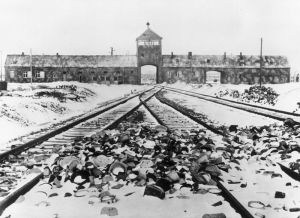 Seventy-five years ago today, Ukrainian advance elements of the Soviet Red Army reached the medieval town of


 According to family stories, my great grandmother was listening to her daily gospel radio show at 11:00 on November 11, 1918 when the announcer broke in to say the Great War was over. Granny Wham always told me she was at the kitchen sink washing the breakfast dishes on December 7, 1941 when the news came over the radio that the Japanese had attacked Pearl Harbor. Until the day she died, Mama would tell me about being in gym class at Gray Court – Owings School when the principal announced over the PA system on November 23, 1963 that President Kennedy had been assassinated. Memories of where you were and what you were doing.
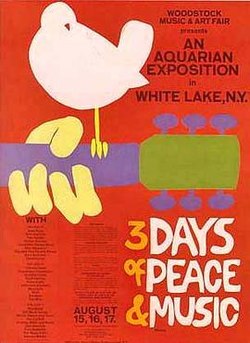 Imagine waking up in the morning and looking out your window to see the population of Cleveland, OH gathered on your back lawn. Now imagine seeing that sight for three days. That mental exercise will give you an idea of what Max Yasgur saw back in August 1969 as he looked out over his dairy farm at what became known as Woodstock after the nearby town which was supposed to host the gathering but ultimately turned the promoters down.