Category Archives: A Story

Great War Wednesday: The Easter Rising 1916

Standard
https://sp.yimg.com/xj/th?id=OIP.M2ca6884d3f0c1aef1830efec1f2da747o0&pid=15.1&P=0&w=300&h=300

The Dublin General Post Office where the rebels headquartered.

The English and the Irish have hated each other for centuries. That hatred has ebbed and flowed from lows of simmering unrest to all out internecine warfare of the most foul and horrid kind over the long history of Anglo-Irish relations. One would have to search the annals long indeed before one could find a flare up of violence to quite match the bloodbath in the streets of Eire during the six days of Easter Week in 1916.

At the time of the rebellion, the rest of Great Britain, as we have noted for the last two years, was embroiled in desperate fighting on the continent in the midst of the Great War. Ireland at the time was under direct British rule, a fact which had chafed the proud Irish for as long back into the mists of time as Henry II. Though they had tried to throw off the English yoke several times before, never had they tried so hard, nor had England been so vulnerable as the massive Easter Rebellion.

The Rising began on Monday, April 24, 1916. Three Irish revolutionary armies — the Irish Volunteers, the Irish Citizen Army, and the Cumann na mBan — acted in accord and seized several British government buildings in Dublin and proclaimed Ireland to be a free and independent republic. Most notably, the rebels raised the Irish Republican flag over their de facto headquarters, the General Post Office in Dublin.

The British response was swift, harsh, and military. Many in England had started to soften towards the Irish over the decades since the last major rebellion in 1878 and the British Parliament had started working on several Home Rule Bills aimed at giving Ireland gradually more independence within the United Kingdom. Unfortunately, such goodwill evaporated in the face of what most saw as a rank stab in the back by the Irish nationalists when England was in the midst of dire straits.

The fighting centered on Dublin where British regular army troops by the thousands poured into the city and began nasty house to house fighting in a precursor to later 20th Century urban warfare. The further into the city center the solders got, however, the stiffer the resistance they encountered. Finally, the two sides formed a somewhat static front at one of the major city thoroughfares.

After the initial surprise of the Monday action, however, the rebels’ fate was sealed. The British Army, with two years experience on the Western Front, brought artillery to bear against the lightly armed revolutionaries. The provisional militias fought bravely and many of their actions are still sung today, but they had no way to counter the massive discrepancy in numbers or the artillery. As a result, by Friday, the Rising was over. The rebel leader nominally in charge of the coalition, schoolmaster Patrick Pearse, agreed to an unconditional surrender Thursday evening.

In the aftermath of the rebellion, over 3000 Dubliners — many who had nothing to do with the action — were rounded up and herded into internment or concentration camps to await trial . . . the use of concentration camps here and earlier during the Boer War enabled Adolf Hitler two decades on to blunt the English attempts to take the moral high ground near the outbreak of World War II by allowing the Germans in essence to say, “We got the idea from you!” The majority of the rebel leaders received swift courts-martial before being found guilty almost to a man, or woman, and were executed before the end of the year.

The political fallout of the Easter Rising proved enormous. For five decades the moderates in Ireland and England had been working towards a constitutional nationalism. That immediately gave way to martial law which stayed in effect long after the Rising ended. Many historians cite the Easter Rising as the opening round of the broader War of Irish Independence of 1919-1920 which would eventually lead to Britain giving in and granting Ireland, save for the Ulster counties, independence and the long sought Home Rule. Unfortunately, the situation in the Ulster counties would lead to a quasi-war between Britain and the Irish Republican Army which would last for decades and became known famously as “The Troubles.”

Probably the most famous non-political participant in the Easter Rising was famed Irish poet W.B. Yeats — incidentally one of my personal favorite poets. He wrote the following poem to commemorate the event.

Easter, 1916

I HAVE met them at close of day
Coming with vivid faces
From counter or desk among grey
Eighteenth-century houses.
I have passed with a nod of the head
Or polite meaningless words,
Or have lingered awhile and said
Polite meaningless words,
And thought before I had done
Of a mocking tale or a gibe
To please a companion
Around the fire at the club,
Being certain that they and I
But lived where motley is worn:
All changed, changed utterly:
A terrible beauty is born.

That woman’s days were spent
In ignorant good-will,
Her nights in argument
Until her voice grew shrill.
What voice more sweet than hers
When, young and beautiful,
She rode to harriers?
This man had kept a school
And rode our winged horse;
This other his helper and friend
Was coming into his force;
He might have won fame in the end,
So sensitive his nature seemed,
So daring and sweet his thought.
This other man I had dreamed
A drunken, vainglorious lout.
He had done most bitter wrong
To some who are near my heart,
Yet I number him in the song;
He, too, has resigned his part
In the casual comedy;
He, too, has been changed in his turn,
Transformed utterly:
A terrible beauty is born.

Hearts with one purpose alone
Through summer and winter seem
Enchanted to a stone
To trouble the living stream.
The horse that comes from the road.
The rider, the birds that range
From cloud to tumbling cloud,
Minute by minute they change;
A shadow of cloud on the stream
Changes minute by minute;
A horse-hoof slides on the brim,
And a horse plashes within it;
The long-legged moor-hens dive,
And hens to moor-cocks call;
Minute by minute they live:
The stone’s in the midst of all.

Too long a sacrifice
Can make a stone of the heart.
O when may it suffice?
That is Heaven’s part, our part
To murmur name upon name,
As a mother names her child
When sleep at last has come
On limbs that had run wild.
What is it but nightfall?
No, no, not night but death;
Was it needless death after all?
For England may keep faith
For all that is done and said.
We know their dream; enough
To know they dreamed and are dead;
And what if excess of love
Bewildered them till they died?
I write it out in a verse –
MacDonagh and MacBride
And Connolly and Pearse
Now and in time to be,
Wherever green is worn,
Are changed, changed utterly:
A terrible beauty is born.

Love y’all and keep those feet clean.

#TBT: It’s Springtime! Oh Joy, sniff, sniff, honk.

Standard

This originally ran on March 31, 2010.

It’s (sniff) springtime (sniff) and so (sniff) time to (sniff) begin my (sniff) love / hate (honk, blow, hack) relationship (sniff) with that (sniff) lovely stuff (sniff, honk) POLLEN (wipe, sniff)!!

All kidding aside, I do love springtime. Daffodils are one of my favorite flowers of all and a square foot of the delicious yellow blossoms still bloom every spring about this time next to the stone steps at Papa and Granny’s (now Aunt Cathy’s) just where Papa and I planted them some thirty years ago. The sky is blue as the bluest eye and the Final Four have been announced. It is spring!

Of course, that means it is hay fever season for me. I do not have allergies. That would be too easy. No, I have demon possessed nasal passages that twinge with the slightest micron of plant matter on the air. To put it simply, if it is green or has a bloom, I’m probably allergic to it. Violently, sickeningly, head-splittingly allergic to it.

From now until the first cold snap in October, my days will consist of bleary eyes and a runny nose. If you want some sound financial advice, invest in facial tissue. I predict a spike in the price of the good stuff as soon as I can get to the store. Budge mowed the yard tonight for the first time this year and I was picking up fallen limbs and other vegetable detritus of winter. We were outside probably ninety minutes at the absolute most. That was about three hours ago and one shower, two Claritin, and four Sudafed (the REAL meth-making stuff; not that knock off crap) later and I can finally sit still long enough to type a blog post. Of course, I have hypertension and Sudafed and Claritin do wonders for raising blood pressure so I’ll have a nice little raging headache for the next few weeks until my body adjusts its chemical soup for the change in seasons.

Of course, I am wildly overjoyed at the wonderful array of pharmaceuticals available to me and my fellow sufferers today. As a child, I had no such balm in my particular Gilead. Nothing then existed to blunt the misery of the spring, summer, and fall allergy season. The only medicine of any effectiveness was Benadryl. Now that is some wonderful stuff, but I had a choice — take Benadryl and spend summer in a coma, or take nothing and let my eyes swell shut and my nose become so raw it would literally ulcerate in some places. I tried to play outside with the other kids, but to be totally honest, I don’t do misery well, so I spent a lot of time indoors or in a Benadryl haze.

My horrible allergies deserve the most credit for all my academic achievements and the most blame for all my athletic failures. I’ve always been told I had a football player’s build, but it’s hard to block someone when your eyes are running rivers and you have to sneeze every fifteen seconds. (Just as an aside, you ever sneeze in a football helmet, you won’t forget it) On the contrary, I’m strangely not allergic to dust (mold is another story) so the dusty stacks of the local library branch were a respite from the yellow swirling air outside. The library was air conditioned as well, which was a nice bonus for a fat kid like me.

So, thanks to hay fever, I graduated second in my class in high school having never been able to play a game of football or baseball in my life. I love baseball. ***sigh***

Well, I’ve got to go blow my nose . . . again. So, y’all keep those feet clean and those pollen masks on and remember I love y’all and we’ll talk at you later.

Habeas Corpus

Standard

Today is Easter Sunday.

Today, Christians the world over celebrate the most important event in the history of the world — Jesus Christ’s rising from the dead. It is the the hinge event of the Western world. Before Jesus’ death and Resurrection, we talk about B.C. but after he rose from the dead, dating changes to A.D. It is a singular event.

I’ve had conversations with people of varying degrees of skepticism and the question inevitably comes up, “So what would it take for you to believe in the truth of Christianity?” I’ve gotten a great many answers but they all rhyme. Each one is a variation on the theme of “I would have to have proof of something absolutely miraculous.” More than once, my reply has been, “Um, a man who was scourged, crucified, DIED, had a big-assed spear shoved into his dead body, was wrapped like a mummy in pounds of linen strips, and sealed in a rock tomb before returning to life then stepping out of said tomb triumphantly three days later to begin 40 days of teaching during which time he was seen, felt, heard, smelt, and maybe even tasted by over 500 people before ascending to Heaven in front of hundreds of eyewitnesses isn’t miraculous enough for you?”

To this day, I’ve never had anyone say, “Yes.” They either stare a hole in the ground at their feet or they smile (or smirk) and say, “but that couldn’t happen.” EXACTLY! That’s why it’s called a MIRACLE! Unfortunately, the Resurrection is not only the most important event in history, but also the most ridiculed event in history as well. To adherents of other religions, including atheism and its current priestly triumvirate of Dawkins, Harris, and the late Hitchens, the idea that a man could — and did — rise from the dead is mythology akin to Prometheus being bound in the Caucasus Mountains or Odin and his offspring riding down the Rainbow Bridge from Asgard to fight Ragnarok.

I’ll tell you a truth about myself. I’m one of the worst Christians you will EVER meet. My life seems to be falling apart sometimes. I suffer from anxiety disorder and bouts of severe depression. I am not a poster child for the overcoming life of joy the Bible teaches we can have. In my dark periods — and they come more often than I feel capable of dealing with sometimes — I have wrestled with doubts. Does God really exist? Is there life after death? Where do we come from and where are we going and a thousand other questions that make me walk the floors of my home night after night. But, in my darkest nights of the soul, I return to one thing — the Resurrection accounts, and in those moments of soul-searing agony, one compelling and unanswerable detail has nailed me to my faith in Christ as surely as He was nailed to a Roman cross.

If Jesus of Nazareth did not raise from the dead, where is His body?

The founders of other religions of the world are accounted for. Gautama the Buddha was cremated and containers of his ashes given as relics to shrines. Confucius is interred in Qufu, China, his hometown. The Mohammad lies beneath the Mosque of the Prophet in Medina. Not only are they accounted for, no other religion even claims their founder 1) WAS God and 2) BODILY rose from the dead. Several, especially the more esoteric ones would have us believe their founders or other holy men “transcended” or rose “spiritually.” In any event, a body eventually gets buried, burned, or otherwise disposed of.

But wither the Carpenter of Nazareth? Where are the remains of He whom Pilate, a Roman provincial governor not prone to flights of superstition, named “REX IVDAEORVM” ? Where is the body of The Christ, the Holy One, the Son of God?

First, Jesus of Nazareth was a real person who died on a real cross at a real point in time in the very real and verifiable Roman province of Judea in or about 33 AD. Forget about “the search for Jesus” or “the historical Jesus”. We have the Gospels and they say He lived. We have Josephus and Philo and they say He lived. Still people want to dispute Jesus’ existence. To them I say, was Julius Caesar real? Prove it. Less material exists mentioning the would-be Roman emperor than mentions Christ by a magnitude of ten yet no one doubts Caesar’s life and deeds. Why must Christ’s life be called a myth? If we are going to play these reindeer games, let’s all play by the same rules for all historical persons.

So, where is His body?

The Resurrection DESTROYED the Roman Empire. Because the majority of the first Christians were Jewish, it made Jews, sadly, a cast out and hunted people. Logic dictates that if either the Romans or the Jews had knowledge of the location or were in actual possession of Jesus’ body, as soon as Christians like Peter started preaching in the streets, these men would have gone to a tomb, carted out Jesus’ body, unwrapped it and said, “Here is your ‘Savior'”. Does anyone think for a moment Christianity would have survived such a revelation? Would Peter and the other Apostles have bothered to die such horrible deaths as they did FOR SOMETHING THEY KNEW WAS A LIE?!

No. Christianity would have come to a swift end because our entire reason for believing rests on a BODILY RESURRECTED Jesus Christ. If Jesus was really just a “great teacher,” the movement his followers started at his command would have died in the cradle, not lived to become the largest religion in the history of the world.

But it didn’t.

Through reading I have settled on two unassailable facets of Roman life. First, the Romans were excellent record keepers. Second, the Romans were excellent killers. The Romans in Palestine who crucified Jesus didn’t “misplace” the body and they didn’t take Jesus down “alive” from the cross so that He “got better” then showed up later on. I don’t have the time or space to shoot those two arguments against the Resurrection as full of holes as they deserve to be, but luckily others have done that yeoman’s work in my place. My suggestion is to start with the thin book by Josh McDowell titled More than a Carpenter if you want to start exploring the arguments over the centuries around Jesus’ death and resurrection.
I must warn you, though, before you undertake such a journey. Many extremely passionate and intelligent men have set out to debunk Christianity’s claim that Jesus rose from the dead. None have succeeded and many have become believers and followers of Christ in the process.

Will you?

Love y’all and Happy Easter.

Why are you seeking the living among the dead? He is Risen, just as He said He would.

Great War Wednesday: Fear God and Dread Nought

Standard

HMS Dreadnought under full steam.

Every now and again something comes along so amazing, so revolutionary it causes a break in time. Much like Christ’s life, death, and resurrection divided history into BC and AD (or the more politically correct BCE and CE) an event or an invention splits our paradigm where everything gets sorted into before this event and after this event. In naval history, one of those history dividing moments came 10 February 1906 with the launch of HMS Dreadnought, the most modern and revolutionary battleship in the world.

In our modern era of overwhelming air power and its projection via aircraft carriers, we don’t think much about battleships anymore, but from the 1500s until 1920s, any country who wished to project power abroad did so with capital ships. Now to give a full history of naval design developments would take much longer than I have to write and you have to read so let me hit the high points. From the 1500s through the American War Between the States of 1860-1865, the primary weapons system of fighting ships anywhere in the world was basically the same: one or more decks of the sailing ship were lined with smoothbore cannon. The accepted tactic was for enemy ships to approach one another at ridiculously close range and blast away at one another until one combatant was reduced to splinters or sank. For nearly 400 years, sail and smoothbore reigned supreme.

Then came the aforementioned American War Between the States and four nearly simultaneous leaps forward in technology. Leap one was the decision to fasten metal plates to the wooden sides of ships, nascent armor.  Leap two was the introduction of steam power and the removal of sails, cutting the umbilical “wind cord.” Thirdly, the rifled cannon came into prominence enabling gunnery at huge distances.

It was the fourth innovation that would later set HMS Dreadnought apart forty years later. A little ship called the USS Monitor made her debut in the Battle of Hampton Roads Bay. She was ironclad, steam driven, and mounted rifled cannon. What was most interesting about her, however, was in an era where some ships carried 100 cannon, she only mounted two, but they were rifled and housed in a contraption called a turret. The turret rotated to give Monitor a 360 field of fire. She didn’t have to wait to come broadside of an opponent; she only needed to turn her turret to gain a shot at a target.

Now, turrets didn’t catch on all over the world overnight. Capital ships, especially battleships, continued to mount their main armament in broadsides with one or two turrets to assist the broadside but these turrets were mounted on the sides of the ship so their field of fire was limited. Battleships also carried several types of guns in different batteries throughout the topside of the ship. Each of these guns required its own special type of ammunition. It was not an efficient system by any stretch.

HMS Goliath, one of the “pre-Dreadnoughts” replaced by the all-big-gun design. Notice the secondary battery amidships.

Then Sir Jacky Fisher became First Sea Lord of the Royal Navy. He set down plans for a battleship with all big guns. Specifically, he wanted a massively armored ship mounting 12 inch naval rifles. Such a craft would be able to engage targets at the heretofore ridiculously long range of 14,000 yards. Royal Naval engineers went to work and the fruits of their labors was the paradigm changing HMS Dreadnought.

When she launched, Dreadnought was the most heavily armored ship in the Royal Navy and, by extension, the world. Despite her massive armor weight, she was also one of the fastest capital ships in the world with a sustained top speed of 21 knots. This speed was due to her innovative steam turbines, the first to be used in the Royal Navy.

What set Dreadnought apart most of all, however, was her main battery. She was the first battleship in the world that did not mount any heavy guns in static positions. Her main battery consisted of ten guns in five turrets of two guns each. Three of these were mounted down the centerline of the vessel, a first for battleship design. The other two turrets rode amidships, one to starboard and one to port. Unlike later “super-Dreadnoughts” which followed along soon enough, none of HMS Dreadnought’s turrets were stacked one atop the other, a situation called “superfiring.”  Although superfiring turrets would be de rigeur for all later battleships because of the superior field of fire thus available to all guns, at the time of Dreadnought‘s launch, no one was sure what would happen if a pair of 12 inch guns from a superfiring turret fired over a lower placed turret. One fear was the resulting muzzle blast would blow back into the lower turret and harm that turret’s crew.

Upon her launch, HMS Dreadnought made every other battleship in the world obsolete. She was much faster, possessed greater armor, and completely outgunned anything else on the high seas. Admirals and other naval officers the world over began referring to their present battleships as “pre-Dreadnoughts” and the struggle began to build Dreadnought style battleships in other countries as well, especially the newly consolidated German Empire.

In a way, Dreadnought helped bring about the Great War simply by her existence. All the other major naval powers had to start building their own new type battleships or risk falling perilously behind in technology. This started a major arms race all over the world. Germany in particular had long been jealous of Great Britain’s naval might and so embarked on a fool’s errand to duplicate the size of the Royal Navy. This escalation of the arms race lead to increased tensions between the two countries, tensions that later boiled over with several other factors to cause the First World War.

Ironically, the battleship that epitomized the class for the modern era never actually fired her guns in anger. The only clash between Great Britain and Germany’s battleship fleets was the famous Battle of Jutland in 1916, but at the time, HMS Dreadnought was in Scapa Flow being refitted with the latest technology. She never got into the war and ended up sold for scrap less than two years after the war to end all wars ended.

Love y’all and keep those feet clean!

One of Dreadnought‘s most famous descendants, the USS Iowa, which served in WWII, Korea, Vietnam, and Desert Storm firing her full main battery.

Goodbye, Conrack

Standard

https://i0.wp.com/www.publishersweekly.com/images/data/ARTICLE_PHOTO/photo/000/015/15537-1.JPGI seldom get emotional writing my little posts. In my creative process, most of what I’m going to say has been ground in the mill of my thoughts for hours or days maybe even weeks preceding my actually sitting down to write and in those times, the emotions come and tug and crush and draw their tears so once I sit down to churn out a post, I can do so relatively dry-eyed. I think it makes for better writing, but I may be wrong. In any event, my process deserted me this time. Three times since Friday I’ve sat down to write and three times I’ve had to leave my computer because the pain is just too raw. Today, I can finally make a go of it.

Pat Conroy, for years my favorite living author, died Friday, March 4, 2016 after a short bout with pancreatic cancer. He took part of me with him.

Tolkien taught me as a child to lose myself in fantasy and flee the monsters I could not fight but those monsters could and would be dealt with by someone stronger. Thomas Wolfe taught me the anguish of loving a place and a people with such fervor and passion the thought of losing them becomes unbearable. They were the authors of my childhood and adolescence. Pat Conroy was the author of my adulthood. He had his own lesson to teach.

In the novels he wrote from his own anguished heart and guided by his own often brutal experiences, I learned the monsters pretty much always win while the people and places we love so much poison us all to death in the end . . . but the monsters still need to be fought and the people and places will have our love even as they destroy us in the process because they are so often one and the same — monstrous people and monstrous places we love dearly all the same. He taught me heartache, pain, and crushing loss are inevitable, but we must face them honorably come what may, preferably with a sardonic smile on our faces.

Mr. Conroy was the rebel I always wanted to be. He was an author who could manage to piss everyone around him off — his school, his erstwhile employers, even his immediate family — and eventually have them all embrace him for showing them the truth about themselves. He never shirked from a fight no matter what the odds. He was hard-drinking and fun-loving and he was the most Southern writer since Faulkner. I read and adored everything he wrote because in his work I saw a glimpse of what I could be if I could just stop worrying about what people think and tell the truth.

I had the pleasure to meet Mr. Conroy in person twice. The first time was at a book signing for Beach Music at the now defunct Open Book in Greenville. I’d just had my first run-in with the powers that be in a school district because I had the temerity to want to TEACH Beach Music to their precious youth group members and tarnish their tender and innocent ears. I actually got to tell him the story even as the line behind me started sending out for rope and torches. I told him I’d considered writing him for his help and advice. He smiled from beneath that unruly shock of white hair and said, “Son, if I’d have tried to help you, you’d have ended up fired and I’d have made the front page for all the wrong reasons . . . again!” Ironically enough, I would be fired from that job a few years later for somewhat different reasons.

The second time I met him was at the awards luncheon for the South Carolina Association of School Librarians. The conference was in Charleston that year and the scheduled speaker had called that morning to stand us up. Luckily, one of the librarians on the awards committee was a personal family friend of the Conroys so she called his home phone on Fripp Island. Not only was he home but he was delighted to come speak to a crowd of librarians on NO notice. He left home immediately and was the keynote speaker at lunchtime. Watching him spin story after encouraging story with nary a note, I saw what I wanted to be, what I could be, if only . . .

I’ve taken each of my signed first editions down from the bookshelf and thumbed through them. It’s a mark of how well-known my love of Conroy novels is that my first edition of The Prince of Tides was the first anniversary present Budge ever gave me. Now, he’s gone.

Conrack, Will McClean, Tom Wingo, Jack McCall . . . whatever he chose to call himself in what he was writing at the time, he always had a story to tell. It was often heartbreaking, usually brutally so, but told in such a way that one never knew if the tears were from the pain of the character or the glory of the writing. He will be missed.

Love y’all. Keep those feet clean.

Great War Wednesday: They Shall Not Pass!

Standard

The battlefield of Verdun then.

The Battle of Verdun began 21 February 1916 in the early morning hours with the largest artillery bombardment in history up to that point. Over a ten hour period, around 800 German artillery pieces – 22 of which were battleship sized 16.5 inch supercannons – fired about 1,000,000 shells into a 58.9 square mile region with the French fort complex of Verdun at the rough center.

Those numbers are too staggering to take in as they are so I’ve worked out a little math, which I hate, to provide some scale for you to consider. The covering fire works out to around 16,000+ shells per square mile, but since some folks — myself included — have trouble visualizing a square mile, so I did some conversion to acres. We Americans LOVE our version of football (which has surprisingly little to do with the feet) so most of us have seen a football field. For my soccer friends internationally, the pitch is close enough to be of no consequence for this exercise. A football field is roughly three-quarters of an acre.

The bombardment of Verdun placed 26.5 high explosive shells — many the size of a Volkswagen Beetle — onto an area slightly less than the size of a football field.

So, picture a football field in your mind. Now place 26.5 shells onto it in a roughly even pattern and ask yourself one question: “Where would I hide?”

The Verdun battlefield today, scarred and shellmarked even 100 years on.

The bombardment lasted ten hours, but halted around six hours for several minutes. This was a ruse to lure the French defenders out into the open to help the wounded or collect the dead. Once the commanders figured enough men had climbed out of the trenches to make it worthwhile, the bombardment opened up again with full intensity.

The Germans advanced following the artillery prelude in a style never seen before. Instead of a mass of feldgrau moving across the pockmarked moonscape, the Germans — eerily forecasting the common units of the Second World War — moved out as squads of “stormtroopers.” Most squads had about ten men in them. The guy out front carried what I think is the most terrifying weapon on any battlefield at any time — a flamethrower. No one had used flamethrowers to this point. Following him were troops carrying not rifles but sacks of the “potato masher” grenades. The idea was a squirt of liquid fire would roust out some hapless French survivors and the ones the flame didn’t kill would get the grenades.

The tactics worked flawlessly that first day. Thousands of French defenders died with German losses totaling a mere 600.

The Germans advanced steadily throughout the remainder of February. They took the east side of the Meuse River as well as several wooded areas. Probably the high point for the Germans came when a small detachment of around 100 men used subterfuge and a tremendous amount of luck to capture the large fortress of Douaumont.

When March rolled around, however, the German plan to bleed the French white started to go awry. The main problem the Germans ran into was they expected their unprecedented artillery bombardment would have destroyed any effective French ability to mount their own artillery attack.

They were wrong.

In fact, most of the French artillery had survived the bombardment and as soon as Generals like Petain could catch their breath long enough, the “Black Butchers” as the Germans called the numerous French 75mm field guns began to beat a bloody tattoo upon the backs of the erstwhile attackers. At that point, Verdun became simply another in the long string of bloodbaths which passed for battles in the Great War. Attack followed counterattack all through the Spring and Summer. Several places changed hands many times. One small outpost village called Fleury swapped occupiers a total of 16 times in around a month’s time.

The death knell of the Germans at Verdun came on 1 July 1916 when the British launched their huge Somme Offensive and went sweeping across the German front to the north. This, combined with the successes of the Russian Brusilov Offensive on the Eastern Front demanded a movement of significant men and materiel from the Verdun sector to these other regions to prevent massive breakthroughs elsewhere.

Falkenhayn had gambled on the French getting too attached to Verdun which would allow his artillery to chew their infantry up. Unfortunately for him, he managed to get sucked in to his own meatgrinder. Rather than simply sitting back and bleeding the French, the cycle of attack and counterattack the Germans so earnestly desired to avoid settled in and once that happened, French morale, far from broken by the early German success soared as men like General Nievelle lead from the front in some cases. It was he who, upon seeing the success the Germans had in the early stages of the battle, issued the famous order which still rings down through the ages to us, “On ne passe pas!” They shall not pass!

The battle ended on 17 December 1916 with the Germans simply pulling back. They left behind 373,882 of their own dead along with 373,231 dead Frenchmen. Wounded, captured, and missing figures would drive those numbers even higher. For his failed gamble, the Kaiser would sack Falkenhayn as the Chief of the General Staff and replace him with the twin headed snake of Paul von Hindenburg and General Erich Ludendorff, the heroes of the Eastern Front.

“The Iron Harvest” of Verdun. Shells like these continue to explode and kill after all this time.

Verdun remains the longest battle in military history by some estimates. The final casualty rolls totaling nearly 1 million ensure it will remain one of the bloodiest as well. To this day, large portions of the land in and around Verdun are off-limits to all but special units of the French military who each year unearth thousands of “dud” shells which still have the potential to explode and wreak death and destruction 100 years after they first fell. In many ways, death not the least, Verdun lives on.

Love y’all and keep those feel clean!

A Little Realpolitik for Y’all

Standard

Calling Donald Trump a blowhard and an idiot is an insult to hard blowing idiots everywhere. In a similar vein, I’m sure Bernie Sanders is a very nice man and probably comes highly recommended from whatever planet he immigrated from. Both of these gentlemen (well, one of two, I guess) are causing a tremendous amount of hand-wringing among my friends because both are leading in the polls here in South Carolina and in several other places in the nation.

I’m here to tell y’all to pump your brakes and settle down.

Here’s the reality of the situation — Donald and Bernie have as much chance of being on the final Presidential ballot in November as I have of buying the land I grew up on OR if you are unfamiliar with my birthplace, a snowball has in Hell.

I don’t care that they are leading in the polls. I don’t care that they’ve won earlier primaries. I don’t care that “The Donald” can buy votes left and right with his kind of money. You heard it here first — neither one will be on the ballot come this fall. They can win every primary from here on out and they STILL won’t be on the ballot. Neither will Ted “The Canadian” Cruz and all for the same reason.

Ted Cruz, Donald Trump, and Bernie Sanders are all COMPLETELY INCAPABLE of winning a general election. They are caricatures of politicians who have enjoyed a modicum of success by exciting very narrow segments of the electorate. They would get slaughtered and I mean SLAUGHTERED in a general election because what no one seems to remember is this country is split in half. Mitt Romney wishes he’d never said it, but he was right. The race is about 5% or so of the country. The other 95% made up their minds long ago.

So why am I so certain these jacklegs won’t be on the ballot? Easy. The Republican and Democratic establishments will never LET them on the ballot. Bernie could win every primary from here on out — Hillary is going to be the Democratic nominee. Same for Trump and Cruz, no matter how great they and their respective narrow bases think they are, the Republican establishment will NEVER let them on the final ballot. The Republican candidate is going to be Marco Rubio or possibly Jeb Bush, but that is a fading chance.

But what about the conventions?

The conventions are exactly what will keep them off the ballot. In Bernie Sander’s case, he can win all 50 states worth of delegates, but the Democratic establishment has a secret weapon they’ve never had to use yet. It’s called “the Superdelegates.” These are delegates unattached to any state who cast their votes independent of any primary results. Also, no matter how many or how few Superdelegates exist, their votes will always outnumber the total of the state delegates — IF NECESSARY. They will need to invoke the superdelegate protocol if Bernie actually looks like he’s going to get nominated. The simple political math is the man can’t win an election so the powers that be in the Democratic party are NEVER going to let him run and get shellacked.

Over among the elephants, they have a similar protocol in place. I don’t know exactly what it is, but they don’t call them Superdelegates. Still, if the GOP gets to the convention and either Ted Cruz or Donald Trump looks to have the nomination locked up, some obscure rule by the party elite will activate and Rubio or maybe Bush — both establishment darlings — will end up on the ticket.

It really is that simple. The party elites are not going to field a candidate for POTUS who doesn’t have a fighting chance of winning a general election. If Trump or Cruz ran on the GOP ticket, RINOs and moderate Republicans would cross the electoral aisle and vote democratic or not vote at all and the establishment is not going to sit by and let that happen.

One day, a clown like Trump may actually get on the ballot, but it’s not coming in November. One day, an eternal college undergraduate like Bernie may get to run for President, but not this year. The folks running the show aren’t going to let them. The only way that is ever going to change is if our current two party system gets overhauled and too many powerful people have WAY too much money involved to allow something like that to happen.

PS: if Donald thinks he’s going to take his ball and run as a third party, all he is doing is making it a cakewalk for Hillary and he knows it.

I hate politics, but I love y’all. Keep away from the politicians and it’ll be a lot easier to keep your feet clean.

#TBT: Let’s Get the Facts Straight, Shall We?

Standard

I originally posted this on February 28, 2012 but with Lady Gaga singing the National Anthem at the Super Bowl AND the Grammy’s just passing by, I thought I’d run it again. Oh, and BTW, everything I say about Lady Gaga could just as easily apply to Miley Skankrous and some of the other pretenders to Lady Madonna’s throne.

I sooooo miss the ’80s. I was there and it was awesome.

It’s taken awhile for me to weigh in on this matter, but with the Super Bowl and then the Grammys right after, I’ve kept my silence long enough. It’s time to set the record straight and if no one else is going to do it, then I am. Lady Gaga is NOT as cool as Madonna. Lady Gaga is not the new generation’s Madonna. Lady Gaga is NOT Madonna’s heir.

I like Lady Gaga, but to paraphrase the infamous debate exchange between Lloyd Benson and Dan Quayle, “I watched Madonna come on the scene. I saw her take MTV by storm. Madonna was my teenage lust-crush and, Lady Gaga, you are NO Madonna.”

Let’s look at the facts. Lady Gaga wears outrageous costumes and has certain risque’ choreography in her videos and acts. Madonna made cone bras and lingerie-as-outerwear fashionable. How many young girls do you see walking down the street wearing a dress made of steak? Right. Now if you had been alive in the ’80s (aka the most awesome decade EVER) you would see girls from 8 to 80 rocking bustiers and fishnets without even standing on the corner. Fashion icon point? Madonna.

Maximum weirdness.

Lady Gaga is the stage name for Stefani Joanne Angelina Germanotta. Madonna’s stage name is . . . well, Madonna. You don’t get cool points for giving yourself a nickname. Nicknames are bestowed; they are earned through hard work and memorableness. Put out an awesome song that cements your place in music history and you get a nickname. Lady Gaga’s well-earned nickname is? Right, she doesn’t have one. Madonna? “The Material Girl,” a name she earned after channeling Marilyn’s turn in “Gentlemen Prefer Blondes”  in the video for the eponymous song. Nickname coolness? Madonna.

That’s 2-0 if you’re keeping score.

Next up is — for lack of a better word — groundbreakingness. Lady Gaga? What’s she done that’s never been done before? Matter of fact, what has she done that Madonna didn’t do before her? The word you are searching for is nada. What taboo walls did Madonna knock down, or more accurately, explode in a blinding flash of flame, fame, and diamonds? Let’s see. First, she writhed around in a pure white wedding dress for “Like a Virgin.” Then there was the “Borderline” blasphemous video for “Like a Prayer” where the erstwhile Catholic schoolgirl danced in next to nothing before a background of burning crosses.

Can you say “Went over like a fart in church?” 

If Skinhead O’Connor hadn’t torn up that picture of Pope John Paul II on Saturday Night Live, Madonna still would be persona non gratia at the Vatican. Oh, and how did she follow that up? She only put out the first video to get an X-rating in its initial release when “Justify My Love” was banned from being shown before midnight on MTV. I still remember being in a cramped and crowded dorm room on E-Hall in the Johnstone Dorms of Clemson University to watch that first showing. Then Madonna went on to release a book and a movie called Sex.

Then, just to show she still had the power to rock an audience with the unexpected, THE Material Girl frenched Christina AND Brittney (back when they were at peak hotness) while wearing a Marlene Deitrich suit just to pass the torch on to the next generation of hot women singers. Taboo destruction points? Madonna.

Still crazy after all these years.

So that’s 3-0 and game, set, and shutout to Madonna. Now with 7 Grammys and 13 MTV awards, Lady Gaga is off to a good start for sure, but she’s still got a ways to go to get 10 Grammys out of 28 nominations and turn 68 MTV nominations into 20 awards INCLUDING “Lifetime Achievement Award.” Lady Gaga is doing well for herself after five years, but can she sustain the flow and keep rocking into a third DECADE like Madonna? Only time will tell.

Of course, as much as I still love Madonna, I respect the fact that she too isn’t completely original.

That honor, of course, would have to go to . . . who else?

Left 2011, right 1992. Not exactly identical, but not bad for a 62-year-old.

CHER!

The Ex-Mrs. Bono is past Social Security age, still rocking, and still pretty hot — thanks to the miracle of modern plastic surgery and despite the stress of having Chas as a daughter/son. Keep it up, girl!

And the rest of you rock on and keep those feet clean.

Love y’all!

Great War Wednesday: Quoi Verdun?

Standard
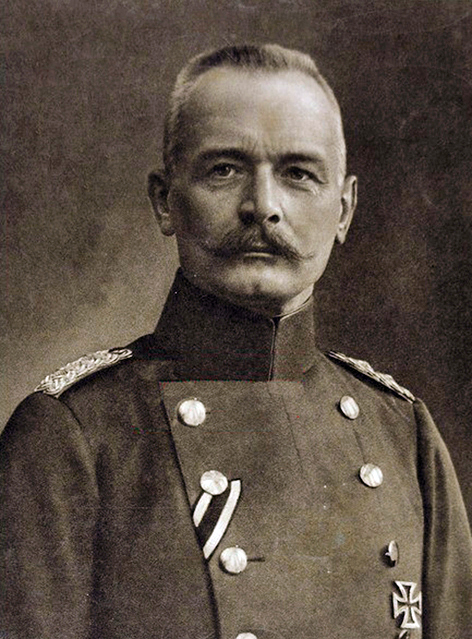
https://upload.wikimedia.org/wikipedia/commons/a/a5/Erich_von_Falkenhayn-retouched.jpg

Erich von Falkenhayn, the man behind the Battle of Verdun.

The winter of 1915-1916 was a grim time for all the combatants of the Great War. Serbia, the little nation that could, fell to the Central Powers. Austria-Hungary hung on by a thread. Huge costly battles at Ypres, Artois, and Champagne taught the commanders of both sides the futility of sending frail, if brave, men of flesh against walls of lead and steel. Having no other strategy, however, both sides continued doing just that.

Up until the Great War, battles involved maneuver and strategic combat. Armies jockeyed for position until one reached a superior and unassailable position; the other side would realize the hopelessness of continued resistance and the battle, and by extension, the war would end. The object was to MOVE and take ground to hold until you had so much of the enemy’s territory he had no choice but suing for peace. Unfortunately, World War One did not behave in such a fashion. After eighteen months the war had ground down to trenches.

Most commanders looked at the vast line of trenches from Switzerland to the North Sea and saw only despair and hopelessness. It seemed no arm of flesh could break the stalemate which was war on the Western Front. One man, however, looked at that heartbreaking line of trenches and saw not despair, but opportunity. That man was German Chief of Staff Erich Georg Anton von Falkenhayn. He saw the Western Front for what it was — a meat grinder for men instead of beef or pork. With such clear eyed vision, he came upon a new plan for warfare.

Falkenhayn’s plan was both simple and diabolical. Since this war seemed to be only about killing men instead of capturing territory, he would simply design a perfect meat grinder. In his own words, he planned to “bleed France white.” He would pick a point along the line which he KNEW France would defend to the last man and launch a continuous attack against it. France would be forced to keep bringing more men to defend the position and German machine guns and artillery would kill them faster and faster until no more “meat” was left for the “grinder.” He was proposing a dedicated war of attrition. The object was never to actually TAKE the position chosen as bait, but to make France defend it until the last man. Then, with France bled dry, the U-Boats would starve England’s island home out of the war.

For his bait, Falkenhayn chose the picturesque fortress town of Verdun.

It is impossible for anyone not French to understand the importance of Verdun to the French people except by analogy. Verdun is to the French what The Alamo is to Texans, Jerusalem is to the Israelis, and Mecca is to the Moslem. Verdun is more than a piece of ground . . . it is sacred. From the Fourth Century, men first known as Franks under Charlemagne had defended a fortress at Verdun. Under Napoleon, the fortress at Verdun withstood repeated attacks by the Coalition, but it was during the disastrous Franco-Prussian war of 1870 when Verdun took on its most holy shroud.

The Franco-Prussian War was an unabashed and unmitigated disaster for the French.  The Prussians — ancestor state to the German nation — ran roughshod over France. The French lost battle after battle. Things were so bad the government actually changed from the Second Empire under Napoleon III to the democratic Third Republic. It didn’t help. Whole French armies were surrounded and surrendered completely. Paris fell under siege. The entire country lay under the Prussian heel — except for the mighty fortress at Verdun. Here the French flag flew until the last. Verdun held under a siege which lasted almost the entire 18 month long war. She never fell, but surrendered when ordered to by the capitulating French government.

Falkenhayn knew all this. He knew Verdun was a symbol to France, the place where she had once withstood the might of Germany and the ONE place she would NEVER surrender. Imagine if the Mexican army had invaded Texas during the Mexican War in the 1850s. Volunteers would have poured into the Alamo to defend it rather than let such a cherished shrine of Texas might fall to anyone. So it was with Verdun. The trap now had its bait. All that remained was for Falkenhayn to crank up his meat grinder and see how many Frenchmen he could kill before France cried, “Oncle!”

He would push the start button on that diabolical machine 21 February 1916 and France would indeed bleed profusely.

Look for more about the Battle of Verdun in the next week or so, but until then, Love y’all and keep those feet clean!

#TBT: Stalking In Stereo Sound

Standard

I first published this post on June 22, 2012 when Adele was burning up the airwaves the first go round. Since “Hello” is on every five minutes now, I thought I’d run it again.

Budge loves Adele. If I try to talk to her when “Set Fire to the Rain” is playing, I get a look that’ll curdle milk and a shush that would make Nancy Pearl blush with pride. Since I don’t like getting snapped at by my beloved, I usually sit quietly and listen to the song. It was during one such session that I decided Adele is the latest artist to add music to the long and storied list of stalker songs.

Now, everybody knows what a stalker song is, right? You know, one of the songs your ex dedicates to you on the late night radio romance show that sends you scurrying in a mad dash down to the police station at the butt crack of dawn the next morning to file the restraining order? Stalker songs!

Some of the more popular stalker songs masquerade as being romantic ballads. Take U2’s “I Will Follow” as an example. On the surface, the jerk finally realizes he should have paid attention to the chick when she was sending him the “come get me” signals. Now though, she’s moved on. What does he do? He lets her know right up front, “If you walkaway, walkaway I walkaway, walkaway…I will follow …” Not a healthy response to rejection.

Still, U2’s little ditty is mild compared to some of the masters of shade watching. I remember Def Leppard coming out with “Two Steps Behind” when I was in high school and thinking, “Wow! What a cool love song!” Once I realized though that the “shadow” he sings about — “you can run, but you can never hide / From the shadow that’s creepin’ up beside you,” — is actually HIM, the song took on a newer, more sinister slant.

Now,  I realize guy stalkers are the ones who garner the most press, but they aren’t the only ones who put out stalker songs. The fairer sex has its share of scorned lovers who want to get even. I mean, look at how the girl in Carly Simon’s hit song takes catching the object of her affection with someone else: “You belong to me / Can it be, honey, that you’re not sure / You belong to me?” Guys, if a girlfriend says that song tells exactly how she feels about you, it MIGHT be time to pull the trigger on that move to Europe you’ve been contemplating. Of course, if your ex takes her cues from Blondie, moving overseas won’t matter because “One way or another [she’s] gonna find ya / [she’s] gonna getcha getcha getcha getcha!”

Dude, if she dedicated “Someone Like You” to you last night on Delilah’s show, you MIGHT want to leave the lid on that pot!

What trips me out the most though is seeing how long and flourishing the history of stereo stalkers has been. For example, if you get past the funky organ and funny name, “96 Tears”, which I always thought was an upbeat little tune, turns really dark. How would YOU interpret the stanza:

Since you left me you’re always laughin’ way down at me
But watch out now I’m gonna get there
We’ll be together for just a little while
And then I’m gonna put you way down here
And you’ll start cryin’ Ninety-six tears

I don’t know about you, but that sounds like a lead in for a Criminal Minds episode if ever one existed! I can see the voice over and pull-away shot of the girl struggling, chained to the wall of a dark basement right now.  Of course, one might expect stalkerish or otherwise odd behavior from a guy who legally changed his name to a piece of punctuation.

What concerns me most, however, are the people who don’t realize a stalker song when they hear it. NO SONG illustrates this more clearly than that wedding standard, that classic “ode to eternal love”, that promise of constancy. Yep, I’m talking about the one, the only “Every Breath You Take” by the Police. I have attended two weddings (against my wishes, mind you) where this was the song played at the altar for the lovely couple.

Did no one in the wedding planning stages ever think to LISTEN TO THE LYRICS? This isn’t a song about a happy relationship blossoming into ripe old age with grandchildren around the rocking chairs on the front porch! This is a ballad to insanity and obsession! I can’t believe it wasn’t the theme song to the all-time scariest stalker movie ever — Fatal Attraction. Just look what the guy says in the first stanza:

Every breath you take
And every move you make
Every bond you break, every step you take
I’ll be watching you

He ends EVERY stanza with “I’ll be watching you!” Who is this guy? Santa Claus? If I go to a wedding and see “EBYT” on the program, I’m praying they include that part about speak now or forever hold your peace, because I’m standing up on the pew and screaming “Dude, you are marrying a Glenn Close clone! Fly you fool! Fly!” Notice I said, “Dude” because even though the song is about a guy watching a girl, no guy gets to pick out the music at his wedding so the bride has to be the mental case.

Gentlemen, we have found him, now we just have to bring him in.

So, after all that explanation, I’m back to Adele. I don’t know WHO screwed this girl over, but I can tell you she isn’t happy about it. I can’t say for certain because I haven’t listened to all of her music, but all the songs I have heard have, “stalker chick revenge” written all over them. I mean, if a girl was singing to me, “For me, it isn’t over . . . ” in a smooth calm voice after she has “turned up out of the blue uninvited” because she “couldn’t stay away [she] couldn’t fight it” I am on the first thing smoking bound for Tristan de Cunha and I’m not looking back.

First though, I’m gonna swing by the house and pick up my bunny rabbit. Know what i mean?

Love y’all and keep those feet clean!