I got to thinking the other day – always a dangerous event – about the myriad twists and turns my life has taken. I started at the here and now and wound my way back to that fateful day, January 6, 1971, when I made my entry into the world. I noted how some of it has been rather good and other has been rather bad. I even slept on my thoughts for awhile because I wasn’t certain I wanted to publish my conclusions since I have no idea how people would take my findings. Eventually, as this post bears witness, I just decided no one would care one way or another what I put so here is my final analysis: I have absolutely no business being alive.
Now, this isn’t a post designed to race to the deep black hole of morbidity and self-flagellation. I have no plans on ending my earthly existence at the moment. No, I am simply exploring cause and effect, action and reaction as it pertains to me arriving at this particular moment in time. The fact I am here is nothing less than the monument to a disaster of train wreck proportions. Allow me to explain.
It all started, as near as I can sift out from various second hand sources and some recollections given to me years ago by the principles in this endeavor, in the year of our Lord 1965 at a local hangout known as Curry’s Lake. Curry’s Lake was more of a pond than lake and it was designed more or less as a public swimming pool. From what I’ve been told, stands stood around the lake selling concessions and other items of need to what was essentially a teenage clientele.
One particularly hot and fateful summer day in 1965, a thirteen year old girl sat on the sandy beach of Curry’s Lake cavorting and conversing with her circle of friends while letting her gaze roam over the crowd. That barely teen-aged girl was Lawana Hughes and in the fullness of time, she would become my mother. This sunny summer’s day, however, future maternity I’m sure was the farthest thing from her mind. Her thoughts were directed to the top of the hill which separated the lake from the parking lot.
Beginning the descent down said hill was a fifteen year old lad with nearly white blond hair, a stocky build, and a cigarette at a jaunty angle on his lips. He was, if the stories are accurate, attired in white jeans with a navy blue t-shirt for a top, looking for all the world like the second coming of James Dean, or so I’ve been told by others. He too circulated in the center of a group of similarly dressed boys all walking down the hill surveying the surroundings like so many feudal lords. Some of the boys in the crowd were at Curry’s Lake to meet female companions but the young man in question was presently unattached and oh how my burdens would be lighter had he remained so. His name was Frank B. Wham, Jr. and he was destined to be my father.
Wannie, for so my mother was known, and Frankie, to distinguish daddy from Papa, met that day. I have no record of their conversation but apparently it was riveting enough to ensure they would meet again. So, in a short time, Wannie and Frankie became boyfriend and girlfriend. Picture this, a 13 year old girl and a 15 year old boy, both dissatisfied with the way things were going at home, come to lean on each other to the exclusion of others. If this were not a recipe for disaster then I’ve no idea what would constitute one. From the beginning the differences in their backgrounds and home lives would dictate this was a bad idea and maybe one day I’ll go into more detail why, but for the moment suffice it to say this was not a joining of equals and more’s the pity someone with sense didn’t see it coming . . . or maybe they did and just felt powerless to stop it. I’m damned if I know.
In any event, Frankie and Wannie were together as much as decency and schedules would allow. Frankie lived up the road in Fountain Inn while Wannie lived in Gray Court. They would go on dates (who goes on dates at 13?) together with friends or alone in Frankie’s car. They had fights and as teenagers will do they would break up now and again vowing to never speak again. I can only imagine if those vows had held.
I don’t know how things would have turned out had the two youngsters been left to their own devices. Maybe they would have stayed together and married much or at least a little later when youthful fires are cooler and good sense prevails. Perhaps they would have split up irrevocably, gone their separate ways never to reunite. It’s a moot point because after two years and some odd months of dating, events conspired to cast the future into stone and erase any chance of what might have been.
The short summary of a lengthily story is Frankie got into a spot of trouble with the law one night after drinking a little more than was advisable for him. I shun the details in this telling because they really aren’t important, I don’t know from first hand accounts exactly what happened, and the outcome is all that really matters anyway. The trouble Frankie got into landed him in front of a magistrate who, for what perverse reason I couldn’t begin to fathom, decided Frankie needed a lesson. His lesson came in the form of a choice of punishment — he could either risk a trial that might result in a prison term or he could enlist for two years in the armed forces and “all would be forgiven.” That’s how Frankie became Private Wham, US Army.
On the surface this arrangement doesn’t seem so bad. A two year enlistment didn’t amount to much when weighted against prison, right? It was a no brain decision. Unfortunately, as these things always have, there was a little catch. This was 1968, the absolute height of the complete cluster known today as the Vietnam War. Being in the regular army in 1968 meant one simple thing — you were going to spend 13 months in Vietnam where boys were being killed and wounded by the thousands every week. What looked like a way out was tantamount to a death sentence. Frankie . . . Daddy was screwed and no one lifted a finger to help him until it was entirely too late.
Here’s where the train jumped the tracks. Wannie and Frankie decided to make a bad situation exponentially worse. Both were convinced Frankie was going to his death in Vietnam and would never return so they decided the absolute best thing in the world to do would be get married. Frankie was just past his 18th birthday and Wannie was just about to turn sweet 16. So . . . they got married on Wannie’s 16th birthday — December 27, 1968. Frankie left for basic training just a short time later.
My question is simple. Who was steering this catastrophe? I love my four grandparents more than anyone I’ve ever loved. They all walked on water in my eyes and I’ve never thought any of them capable of being anything less than perfect until I started thinking about this disaster that directly got me on this ball of rock. They could have stopped this mess. Wannie couldn’t legally marry in South Carolina at the time. She would have had to be 18. She was 16, really 15 until the day of the wedding. Whatever possessed Granny and Papa Hughes to sign away their permission for her to wed?
Now I know for a fact the two lovebirds had threatened to sneak over the state line to Georgia where the age of marriageable consent was only 16 at the time and I’ve been told Papa and Granny Hughes felt they didn’t have a choice because they didn’t want Wannie running off and getting married. WHY NOT? It’s called a childish bluff! If they want to run off, MAKE THEM RUN OFF! Don’t pave the rough road ahead and make it easier. In the name of all that’s holy why didn’t one or the other set of parents stop this craziness? These were children who were operating under stress and emotion. Someone SHOULD have done something. . . but no one did anything and here’s what happened.
Frankie and Wannie got married on her 16th birthday. Frankie went off to war. Wannie dropped out of school where she was a straight A student with some money set aside for college because according to the draconian codes in schools at the time a girl couldn’t be married and attend school. So Wannie’s chance at a good education went the way of the Great Auk and she went from dead end job to dead end job for most of the rest of her life. I coached her to get her GED during my senior year of college.
Frankie had it worse. He ended up in the middle of Hell on earth in the most unpopular and worst run war this country has ever fought. He saw friends killed and maimed in the worst ways possible. He slept in heat and mud like we’ve never seen here and no one could tell him what he was fighting for and what his friends were dying for. He survived, barely, but the man who came home bore no resemblance to the boy who left.
While Frankie was on leave from Vietnam waiting to go to West Germany for the second year of his enlistment, I was conceived. I will spare you the details, but one interesting thing about my journey to the world . . . Mama was in a body cast from the belly button down. The doctor actually had to cut an arc in her cast so I could grow. I often thought about asking Mama or Daddy about the mechanics involved but I always decided it was one of those multitude of things I was better off not knowing.
Fast forward a year and a half. I’m born, Daddy’s home from the army. Mama is raising me. It was sweet and peaceful while it lasted . . . at least I guess it was because to be brutally honest, I don’t have a lot of memories from Mama and Daddy being together. Things jolted along until I was five, but the deep cracks had already formed. Daddy wasn’t the man Mama married and try as she might she couldn’t get her Frankie back. Daddy met another woman. He liked her better. He and Mama divorced when I was eight and the wheels fell completely off the apple cart. Mama was 23 and Daddy was 25 when they divorced.
All because Romeo and Juliet had to get married and no one had the guts to stop them. No one was thinking about me at the time but in the end, I’M the one who bears the heaviest weight. Sure, it bothered other people. Mama was never the same and I spent forty years trying to fix what the divorce did to her. I was so angry with Daddy that he and I never have managed a good normal father son relationship. But I’m the one who lost my childhood. I’m the one who had to take on responsibilities I didn’t understand and couldn’t hope to bear up under. It’s been forty years and part of me is still angry.
It all could have been so easily avoided if someone had just stopped the marriage. Daddy would have come home and he and Mama probably would have realized how different everything was now and they likely never would have married and I’d have never been born . . . and how different that would have been, but no one stepped up, so here we are.
Love y’all and keep your feet clean.


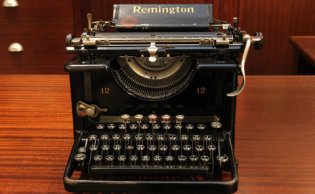 This post is somewhat out of desperation. Ever since I started this blog back in September 2008, I’ve always managed at least one post per month. Something stirred my mind yesterday and I realized today was the last day of May and I hadn’t posted anything this month! I didn’t want to break a perfect streak so I went to sleep last night thinking about what to write today. As I was drifting off, I thought I’d settle on telling y’all why I don’t publish any more writing on this blog than I do.
 The French still recall Verdun; the British have the Somme; the Anzacs, Gallipoli. When the Americans began fighting on their own they would remember Belleau Wood as a place of honor, but for the Canadians, the Battle of Vimy Ridge remains the most important battle of the Great War. This battle, fought from April 8 to April 12, 1917 marked the first time all four all-Canadian divisions had been assembled in one place for one assault. They would make the most of their opportunity.
 On 6 April 1917, the United States’ patience with the Central Powers ran out and President Woodrow Wilson asked for and received a declaration of war from Congress. After almost three years of sitting neutral on the sidelines, America was a combatant in the Great War.
 We intend to begin on the first of February unrestricted submarine warfare. We shall endeavor in spite of this to keep the United States of America neutral. In the event of this not succeeding, we make Mexico a proposal of alliance on the following basis: make war together, make peace together, generous financial support and an understanding on our part that Mexico is to reconquer the lost territory in Texas, New Mexico, and Arizona. The settlement in detail is left to you. You will inform the President of the above most secretly as soon as the outbreak of war with the United States of America is certain and add the suggestion that he should, on his own initiative, invite Japan to immediate adherence and at the same time mediate between Japan and ourselves. Please call the President’s attention to the fact that the ruthless employment of our submarines now offers the prospect of compelling England in a few months to make peace.
 This past weekend, 330 wrestlers from all over the country competed in the 2017 NCAA Championship Tournament. My favorite college wrestling team, Penn St., won the team title by a large margin, helped by the strength of five individual champions. The Penn St. wrestler who impressed me most this year, however, never stepped on the mat at Nationals. He was the one Nittany Lion who did not qualify for the tournament. His name is George Carpenter.
 I wrote this a couple of years ago when the FIRST Fifty Shades movie came out and since its equally vapid sequel has just hit the screens, I thought it would be a good time to rerun it.


 It didn’t take long looking at the killing fields of the Western Front in 1914-1916 for some commanders at all levels to think, “We have to find a better way.” The whole idea of flesh and blood men jumping out of the scant protection of the trenches to run across the shell cratered and machine gun swept No-Man’s Land was obviously insane and yet, what to do about it?
 Some friends and I went to see Rogue One over the weekend and it was an extremely enjoyable movie. I recommend it to Star Wars fans who can appreciate all the plethora of “easter eggs” the movie has buried in it. Still, anytime I go to a Star Wars movie, the experience is always tinged with sadness. Whenever I see those blue words on the starry screen “A long time ago in a galaxy far, far away. . .” I am instantly transported to a time when I was young and innocent . . . and my world was beginning to fall apart.

