 I realized recently this would be my 400th post, so I wanted something with a little weight to write about. The result is what’s been going through my head for some time now, especially as I read comment sections of other blogs and other media. It’s the conclusion I’ve reached on belief and believing.
In brief, believe whatever you want to because it does not matter and it does not matter because, in the end, your belief or disbelief in something or other changes whatever you believe or disbelieve NOT A WHIT. Whatever you believe may be fine for you and it may speak to your vision of reality, but nothing you believe ACTUALLY affects reality at all.
So, what do I mean?
I’m not a nihilist. Life is full of meaning and most nihilists are anti-meaning. I am a realist. The political sphere provides abundant examples. I know several people who are CERTAIN the current POTUS, Barak Obama, is a foreign born Muslim. They believe that with all that is within them. Let them. He may, in fact BE a foreign born Muslim; he may also be a foreign born Christian, or a native born Muslim or a Native born atheist or a foreign born Rastifarian. Whatever he is, what people believe does not change what is. He is whatever he is and while we may not ever accurately KNOW President Obama’s birth status or his religious mores, it doesn’t matter because whatever we believe has no effect on the true reality.
Another President, Abraham Lincoln, illustrates my point with a brief anecdote:
If you consider the tail of a dog to be a leg, how many legs does a dog have? Answer? A dog has four legs because calling a tail a leg doesn’t make it one.
I’ve mentioned Bruce Jenner in previous posts. He and his legion of followers believe he is now a woman. In point of fact, he is a man. He can call himself a woman, he can dress in women’s clothes, he can adopt a woman’s name, but if he swabs the inside of his cheek and submits his spit to DNA testing, the last chromosomes on his chain will be XY. Anyone who has the genotype XY is male regardless what he believes or what all the media outlets in the world proclaim. Belief does not affect reality.
People are at home with belief; they are at home with grey. Unfortunately, the world of stark reality is a world of factual black and white which gives no consideration at all to people’s belief or disbelief.
Another example from history is the cause of the American Civil War. A group of people still believe with all their hearts that the American Civil War was NOT fought over slavery. They are entitled to believe this as fervently as they like but it will not change the fact that the Civil War WAS fought over slavery anymore than calling a tail a leg makes it a leg. People will say, “the war was over states’ rights.” Yes, it was over states’ rights to allow ownership of slaves. Everything else attached to the term “states’ rights” is window dressing. The Union fought the war to end slavery and when the war ended, so did slavery.
Many people, including my beloved great-grandfather, are completely certain beyond swaying that the Apollo Moon landings of the late 1960’s and early 1970’s were staged in the basement of the Pentagon. As much as they believe this and as much as they want others to believe it, all their belief will not remove the now bleached white American flag and Neil Armstrong’s footprints from the surface of our nearest neighbor in space. Of course, it is possible they are right, in which case the flag is not on the Moon’s surface but in some basement broom closet in the Pentagon. If it is, however, it is because of reality, not their belief.
Up until now, I’ve stuck to the concrete, but the concept is just as accurate in the philosophical, metaphysical, and religious realms as well. I firmly (most days) believe in God. Specifically, I believe in a Nicean God with a Chalcedonian Christ. Across the water in merry olde England, Richard Dawkins believe EVERY DAY that God is a myth and does not exist any more than unicorns and dragon turtles. I may be right or he may be right. Either way, God is neither brought into existence nor banished from the universe by the firing of our neurons. He either IS or He ISN’T. If He IS, all the naysaying by atheists in the world cannot remove Him from His throne and if He ISN’T, all the faith of every Christian past, present, and future is in vain because Fact and Fiction are embedded in the fabric of reality and our beliefs have no sway over them regardless of how fervent those beliefs may be held.
If it looks as though I’m angling for some sort of metaphysical moral or spiritual relativism, I’m not. Quite the contrary, I’m pointing to the absolute FACT of an ABSOLUTE TRUTH because an ABSOLUTELY TRUE REALITY EXISTS whether we can grasp the concept or not and our beliefs do not shape said reality. Within this reality, ISIS is killing people who don’t believe what ISIS believes and such a path is ignorant to follow because ISIS can believe whatever and the people they kill can believe whatever again and neither one will change what actually IS because our beliefs have no sway over reality.
Finally, and here is where the rubber meets the road, only ONE reality exists. In terms of religion this means Atheism, Agnosticism, Christianity, Islam, Hinduism, Jainism, Buddhism, etc, etc ad nauseum cannot ALL provide a correct lens through which to view reality. ONE is correct and ALL the others are WRONG and the metaphysical consequences are huge, but so entangled in belief as to be inextricable BUT those beliefs DO NOT AFFECT REALITY, whatever it is.
In the end then, the phrase shouldn’t really be “it is what it is,” but more accurately “what is, is.”
Post #400. I hope you have something to think about now.
Love y’all and keep your feet clean.


 In Flanders Fields


 World War I was the proving ground for a great number of new weapon systems. Machine guns entered widespread usage. Artillery improved to the pinnacle of its deadliness. Submarines and airplanes made their debut on the big stage, and poison gas wasn’t just for use against tribal natives anymore.





 Yogi Berra was one of the greatest players to ever strap on a set of baseball spikes. The numbers speak for themselves, he holds the record for most appearances in a World Series at a staggering 14 as a player and seven more as manager or coach. Twenty-one times he appeared on baseball’s largest stage and in the process, became larger than life.
 From the start of the Great War through September 1915, the air war, such as it was, had been dominated by the Allies. This was mainly due to two fortunate circumstances. First, they had more planes initially and second, more importantly, they had more rich young men who became pilots in the pre-War years as somewhat of a hobby. The British especially flew hundreds of sorties over the Western Front, generally to spot for the artillery and gather intelligence on troop movements for the generals. For the most part, these flights of the plodding scout aircraft came and went unimpeded across the lines. The few German planes, such as the Taube type, were outclassed by early British fighters such as the Vickers FB.5 and the French Morane-Saulnier L types. All that came to a screeching halt when Anthony Fokker’s brainchild, the Fokker E.I Eindecker appeared in September 1915 and initiated the period of the air war known as the Fokker Scourge.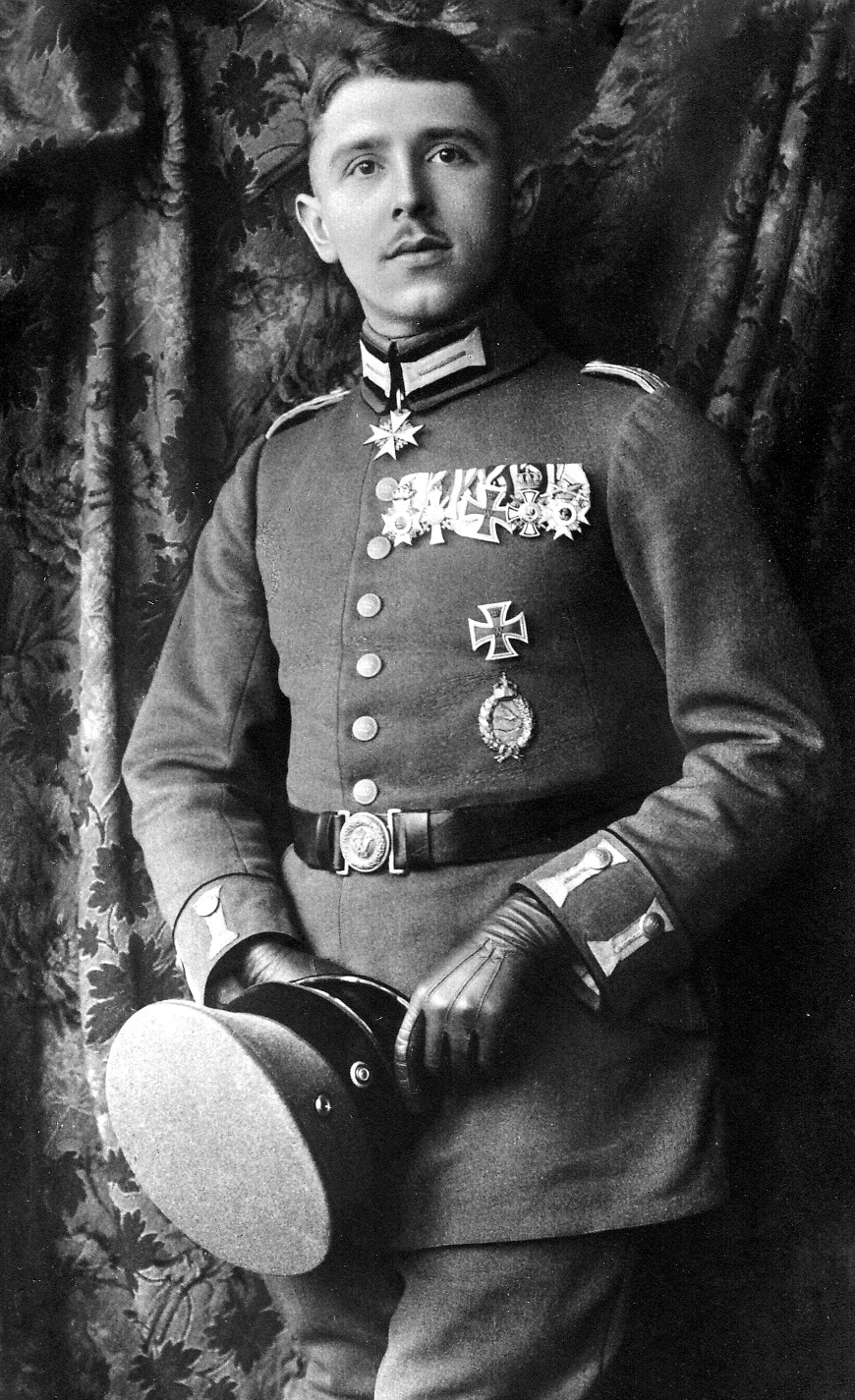

 Back in late May, I was at the beginning of the

